Blog

Wheat & farming · 578 articles / Newest firstClear filters

2011 / 02

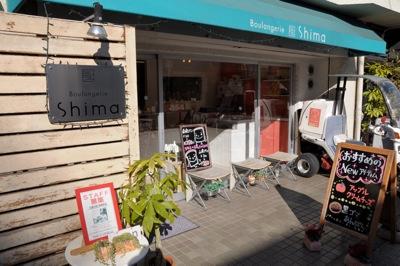
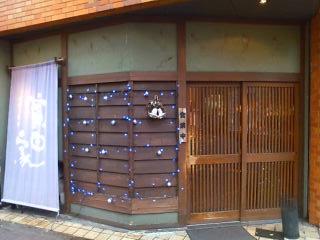
Boulangerie Shima (Sanchaome)

Number 17: It’s a boulangerie, but it’s not a boulangerie. It’s a boulangerie in terms of the spirit of wanting to make noble-quality bread. But the kind of high hurdle you feel from the word “boulangerie” isn’t here. Instead, what’s here is a sense of安心 like when you come to a local bakery, and a feeling that things aren’t rushed. There are also breads made with yeast, but there are…

Discuss this article ↗

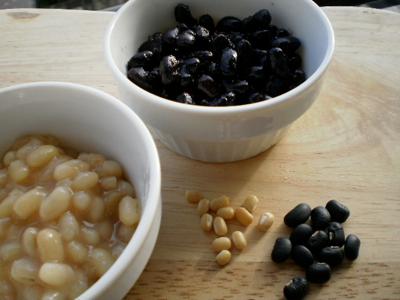
White adzuki beans and black adzuki beans

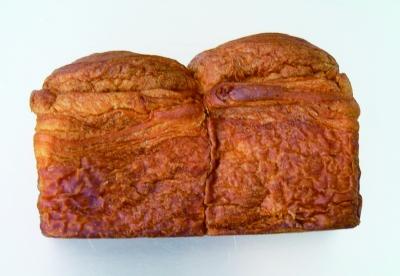
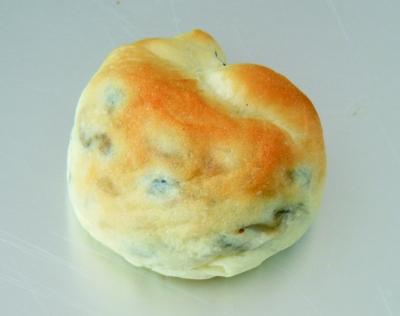
It’s already ended—well, the one-twelfth of 2011 is over. Year-end and New Year’s… Was it really already a month ago that I was eating Tamaki-tei’s (たま木亭) kaku-shokupan (角食パン) in Kyoto while listening to the temple bells on New Year’s Eve (除夜の鐘)? Even after the year turned, it’s been all about bread. For New Year’s, it was a bread-life worthy of a true bread lover: Tamaki-pan and osechi. Of course?! I didn’t eat ozoni / mochi. Mochi and bean paste—

Discuss this article ↗

2011 / 01

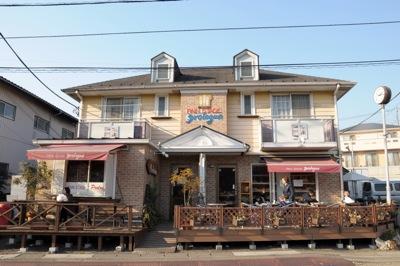
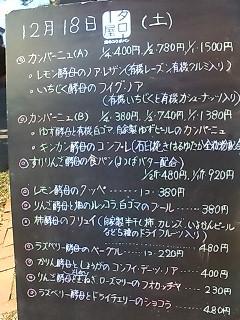
Pan Stage Prologue (Tama Plaza)

Shop No. 9—At lunchtime, when we got to this place, lots of madams were eating bread in the wood-deck eat-in space. In the clear sky, high and blue, with no wind—on this mild little day of early autumn weather (小春日和)—that scene looked happy. Dominique Sa… (かのドミニク・サブロン) decided to expand bread shops that incorporate restaurants in Japan and France; about the source of the idea, “In Japan, …”

Discuss this article ↗

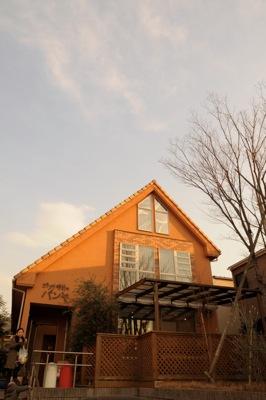
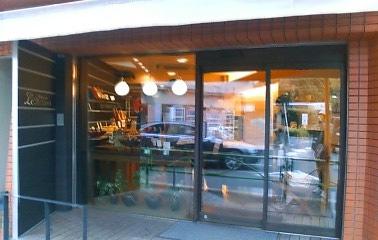
The bread shop of the contraption clock (Tama Plaza)

Shop No. 8—A bus running from Tama Plaza Station goes up and down the slopes again and again, showing that this area used to be hilly terrain. On top of that hill, in front of a park lush with greenery, there is a bread shop in a building that looks like a mountain hut. I kept getting drawn in by the unique names of breads like “Cipher Name: Mebado” (暗号名メバド) and “Whisper of the Ruby” (ルビーのささやき), and I had misread what this shop was all about. It’s because the people at the shop do their very best to serve the customers…

Discuss this article ↗

001. Dominique Subron of Le Boulangerie Dominique Subron

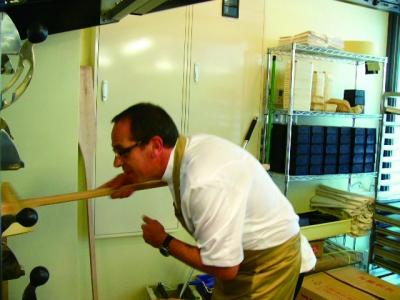
It was when Dominique Subron himself did a demonstration for people in the media, removing a baguette from the oven. Each baguette—grasped one by one, the size of his hand. Even taking into account that he’s French, it was something worthy of staring at in amazement. I had already spent several hours together with him, yet until he started baking bread I hadn’t even noticed…

Discuss this article ↗

Bäckerei Brot Zeit

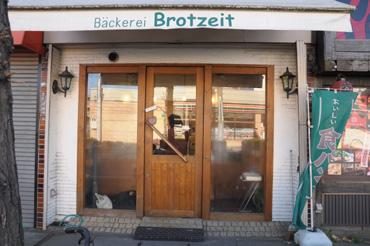
On the third stall, in Urawa’s outskirts, in a place called Nishi-Urawa, there was an amazing bread craftsman. Chef Miyabayashi of Marindō said, “I don’t really meet a bakery around Tokyo that impresses me, but Bäckerei Brot Zeit is the one that’s good,” and it’s not exactly a lie. It was the first time I’d seen a shop where the oven and the cash register are this close. This chef runs the shop all by himself.

Discuss this article ↗

2010 / 12

Yamazaki’s “Raisin-Lovers’ Raisin Bread”

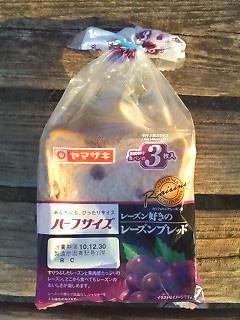
For bagged bread, the package and what’s inside are related in the sense that you set a hurdle for yourself and then overcome it. For example, the lowest hurdle is simply writing “raisin sandwich bread” (raisin shokupan) and nothing else. In that case, no matter how it turns out, if you just mix raisins into plain sandwich bread, then you have cleared the hurdle you set. But as for people who go over to the bread section in a supermarket, their h…

Discuss this article ↗

Kaiju-ya’s British-style sandwich bread

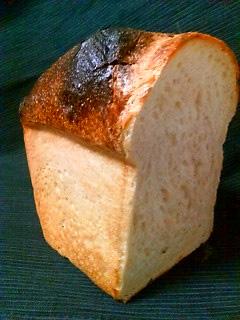
At 4 p.m., I lined up with the people waiting for Kaiju-ya to open, and noticed a raw, vivid scent I’ve never smelled anywhere else. The thought I had the first time I sniffed it was this: isn’t the “bread smell” you get at an ordinary bakery just the scent given off by the delicious-looking breads already neatly laid out and contained on the display shelves? What was lingering at the entrance of Kaiju-ya was the scent of the actual site (the real place). Right now, wheat and flame are colliding…

Discuss this article ↗

Taro-ya

There is a bakery that only opens once a week. It’s called Taro-ya, and it’s near Komaba Stadium, the home ground of Urawa Reds. Even though it’s in a residential area, it’s a place where you can see fields scattered about, and you end up getting lost for a while trying to reach it by bicycle along a winding road that makes you recall that it used to be a narrow path between rice paddies/fields. The person who arrived at the shop around the same time said right off the bat, “It’s hard to find, isn’t it—,” so surely it…

Discuss this article ↗

Hamaday-ya

In terms of the concept of “Japanese taste” (wa taste), it seems like Hamaday-ya doesn’t allow any other shop to follow along at all. It exists, yet it doesn’t. It looks as though you could copy it, but you can’t. I can feel the power of those origins in every dough of Hamaday-ya’s breads. Even though it’s on the sweeter side, it feels completely natural—almost like the very taste of wheat itself. There’s a hint of nostalgia within the aroma of the yeast. The texture is quite moist and…

Discuss this article ↗

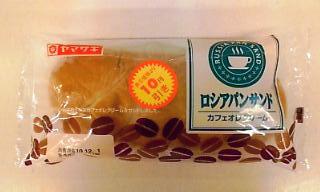
Yamazaki’s Russian pan sandwich

At the supermarket, I found something called a Russian pan sandwich, and my local bread antenna reacted instantly. And if it’s “Russian,” maybe it’s not just at the prefecture level, but even at the possibility of a “worldwide local bread” category, right? I thought that, but then I also thought, “Wait a second.” What makes something a local bread representative of its own region—those wings of inspiration and imagination flap and you name it…

Discuss this article ↗

2010 / 11

Le Ruisseau

Tucked away from the hustle and bustle of Shibuya, but only two stations away, in a quiet residential neighborhood—Le Ruisseau is there. As I mentioned earlier, Chef Shimizu is someone who trained at Maison Kaiser in Paris and then helped set up Maison Kaiser in Japan. I don’t think there’s any doubt that this shop is a little Paris in Tokyo. But it’s not like it’s just run at a level that a new and up-and-coming chef operates—

Discuss this article ↗

Unlimited drinks until tomorrow! Trends and countermeasures for the 2010 Yamanashi Nouveau Festival

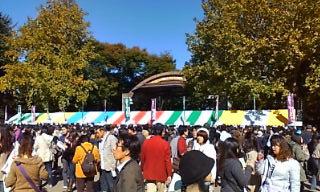
The 2010 Yamanashi Nouveau Festival is being held at Hibiya Park’s Fountain Plaza until tomorrow, November 4. “Yamanashi Nouveau” refers to wine from this year that will be released all at once starting November 3, and if you come to this Nouveau Festival, you can taste nouveau made by most of the wineries in Yamanashi Prefecture. In other words, if you pay 1000 yen at the entrance, it’s all-you-can-drink all kinds of wine.

Discuss this article ↗

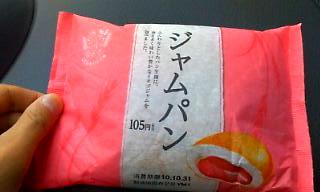
FamilyMart’s jam bread

It’s a package I’ve seen somewhere—I thought it looked like Fujipan’s “Yawaraka” series. Like paper that looks like washi, and places where you can’t really see the contents—only the illustrations are written. If you get calm and compare it with the photos of the real thing, you can see differences in a certain way, but at the storefront, I truly thought it was exactly the same. Fujipan’s—

Discuss this article ↗

2010 / 10

PASCO milk bread

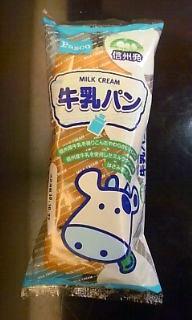
It was new release or something, though I don’t know exactly what, but it’s PASCO’s milk bread that I hadn’t seen in supermarkets until now. The tagline quietly written on the package—“from Shinshū”—made my local bread-loving antenna respond sharply. It turns out that milk bread is a bread that’s widely eaten in Nagano Prefecture and is placed in various bakeries and supermarkets—something of a local staple bread. Among them, the most famous—Matsumoto—

Discuss this article ↗

Miso bread (Bread 10 from the Local Bread Festival)

I live in the suburbs of Tokyo, but even when I think of local breads in Tokyo, it doesn’t immediately come to mind. Curry pan, anpan, cream pan—everything was created in Tokyo, so in a sense you could say it’s local bread, but once it becomes famous in Tokyo, that immediately means it becomes available nationwide, so it’s hard to look for local breads in Tokyo. And then I found that there are local breads in Tokyo too. Kame—

Discuss this article ↗

HisuI bread (Bread 9 from the Local Bread Festival)

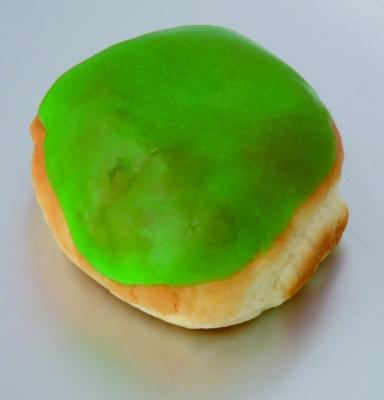
When I learned the results of the Local Bread Festival—first was yōkan-pān and I knew it was third place—and “Hisui bread, what’s going on?” was the first thing I thought. Using the same concept but not red bean paste; it’s yōkan. And apparently, back then, they also called it “yōkan bread.” Even the unusual green color is part of what makes it like a local bread that competes on uniqueness. The butter scent that gets scattered around makes it feel like an old-fashioned, quintessential bag bread, the kind you can practically imagine from long ago—

Discuss this article ↗

Fukushima yume anpan (Local Bread Festival bread No. 8)

They say that the world of bread has a west-high and east-low pattern. In the Local Bread Festival, while many formidable players were gathered in the western part of Japan, as you went farther east, the number of breads worth seeing steadily decreased. Among them, the one that stood out was Fukushima yume anpan. In voting, it also put up a strong fight, finishing 6th, with only a small gap from 3rd (yokanpan) (though perhaps the votes stopped increasing partway due to it selling out). The peach aroma is so good—

Discuss this article ↗

Tamban black bean bread (Local Bread Festival bread No. 6)

I had been one-sidedly assuming that you can’t expect much from bakeries inside supermarkets, and so on, but in Hyogo Prefecture, in-store bakeries are also at a high level. After I ate Coop Kobe’s Tamban black bean bread, I couldn’t help but think that. The dough is chewy, and like bread flour’s sweetness that’s similar to white bread, it spreads gradually as it melts. There’s no sweetness from sugar. That slight lack—

Discuss this article ↗

Pan Calendar 2011

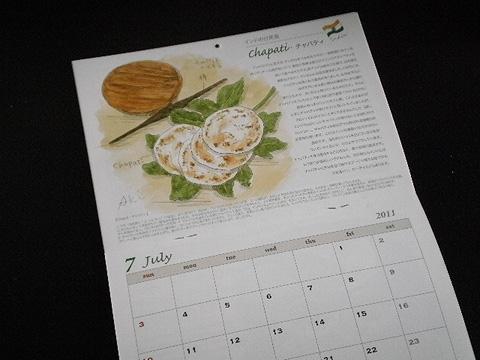
After the summer that was too hot and lasted too long ended, at last the season for appetite came. This past summer, I had been taking shelter at the foot of Mt. Yatsugatake in my hometown, but as for the bread, I ate it “properly” every day. Yes, I was eating the coppe bread for school lunch that they bake at my parents’ house—every day… . The freshly baked coppe bread tastes good, but if you have it day after day, and for more than a month, you inevitably get tired of it. Still, at 5 p.m., when the bread factory was finished—

Discuss this article ↗

A dango bread out of nowhere (Local Bread Festival bread No. 2)

Continuing from before, it’s a product from Takaoka Seipan in Kumamoto. How many attractive options does Takaoka Seipan really have—Negi pan, milk bread, and then a dango bread out of nowhere! For the local newspaper to report that the Local Bread Festival silver medal went to them, and for the president to comment that “the color would have been better if it were gold,” you can’t help but wonder whether they’ll be sending new breads again next year as well—their future direction is impossible to take your eyes off. Negi pan—

Discuss this article ↗

Negi pan (Local Bread Festival bread No. 1)

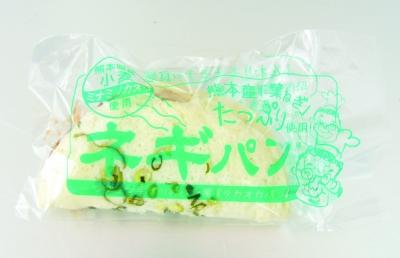
The Negi pan that won 2nd place at the recent Local Bread Festival. The package printed in a single color has the shop owner’s illustrations on it, giving a great sense of warmth and homeliness. I had already started to like it even before I ate it. Finely chopped negi (green onion) is topped all over the surface. A distinctly Japanese indigenous taste—full-on okonomiyaki flavor. Inside, it’s spread with a mixture of bonito flakes, sauce, and mayonnaise, then folded in half. In that shape too, it’s like negi-yaki (green onion pancake) turned into bread—

Discuss this article ↗

“Report 3 of the First Nationwide Local Bread Festival in Japan”

It continues! ↓↓↓ Now, in Kanagawa Prefecture, the Odawara mikan pan from Sakaeya Seipan. First of all, what is the definition of “local bread”… ◎ Bread made using locally produced wheat flour ◎ Bread made using local specialty products ◎ Bread that has long been loved in the local area (even if using imported wheat outside the region is okay) Thinking about it while looking at the entries—“bread that fits one of these”—it’s fun all over again. Miso pan from Gunma Prefecture. Sweet and savory.

Discuss this article ↗

First Nationwide Local Bread Festival in Japan—Japan’s Fastest Report 1

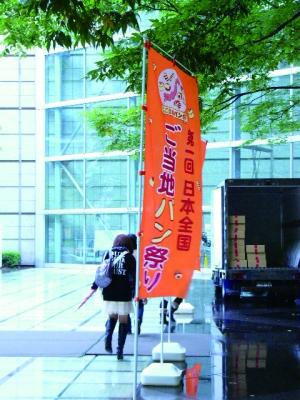
I went to the first Nationwide Local Bread Festival in Japan. The location was the Tokyo International Forum’s outdoor plaza, which was also where last December’s “Strasbourg Marche de Noel 2009” was held. Thirty-nine? No, forty carefully selected bakeries from all over the country gathered, and it became a festival where they competed with the tastes of their proud local breads. If it’s something like that, can’t people involved with Pan Labo not participate? (No, they can’t not participate.)

Discuss this article ↗

パンラボ · 朝日新聞「このパンがすごい!」