Blog

2011 · 391 articles / Newest firstClear filters

2011 / 01

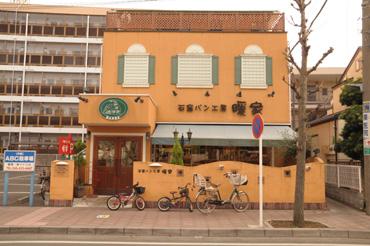
Honoka (Tama Plaza)

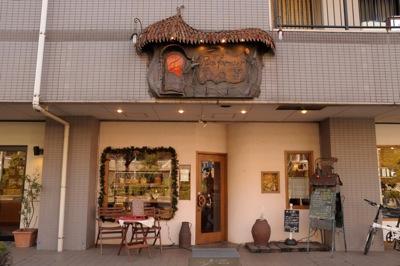
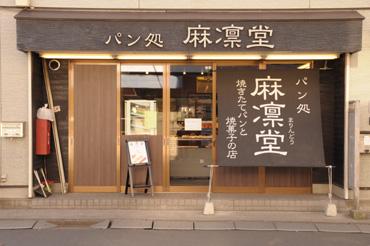
Shop No. 7—Wouldn’t the personality of the people who make the bread be closely connected to the bread itself? My impression of Chef Manabu Yoshida when I was allowed to do an interview was that he’s a straightforward person who doesn’t put himself out there. And I think that shows in the way the bread is displayed as well. Inside a not-so-large shop, breads from around the world are lined up—pita bread, focaccia, and so on. Centering on hard-style breads, along with… shokupan…

Discuss this article ↗

An artisan interview with Perikan—Finishing the interview

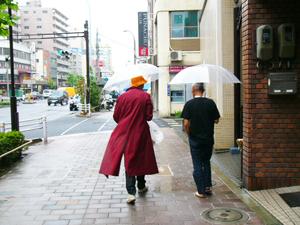
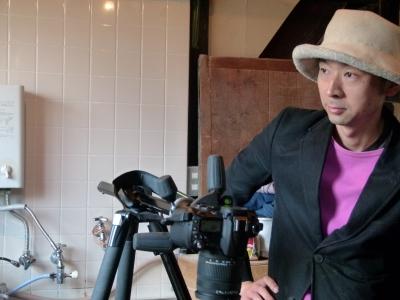
It was when I was about to head back after finishing the interview. Mr. Watanabe said, “Let’s go for a walk,” and we went along with him. Asakusa on a light rainy day. There are stories that weren’t mentioned in the interview too. Mr. Watanabe kept taking photos and, thinking of me for some reason because I was saying nothing, he asked, “Are you a cameraman?” He talked about how sometimes he takes pictures for the blog. “How…

Discuss this article ↗

002. Watanabe Takeshi of Perikan

About the magical power of Perikan bread that captures people and doesn’t let go—how the second generation said: “I don’t know why, but I just want to eat that (…);” and “We look for the essential part of that desire and approach it,” and yet it’s “a bread with which you can get along casually, and in a thin, long-lasting way.” Or else, he expressed it as “elasticity and tension.” Indeed, the deliciousness of Perikan bread is, besides elasticity…

Discuss this article ↗

Bekkerai Tokutarō

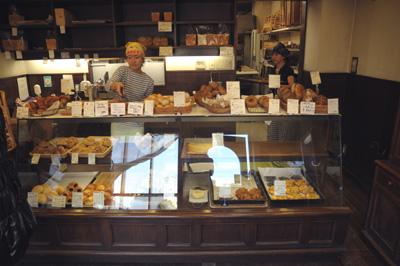
Shop No. 6—At Bekkerai Tokutarō’s cooking area, I’ve had a chance to talk with them. For just one type of bread, Ms. Tokunaga Umiko talked on and on about the background of how she came to make it at the shop and her devotion to it. Beside her, Mr. Jun Tokunaga (her husband) kept making bread with unbelievable focus without saying a word. A homey gentleness and a craftsman’s spirit. The bread of Bekkerai Tokutarō has the appearance of perfection.

Discuss this article ↗

Recreating the bread of Le Petit Mec Tokyo

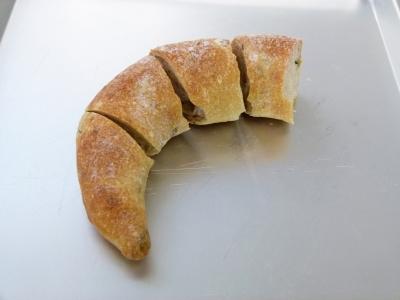
Mr. Kashiwade often brings home bread from Le Petit Mec Tokyo. The pieces that were cut in advance so that everyone could eat them were placed on a tray. I gathered up the crumbs and tried recreating the original form like this. (Since I don’t know what the original looks like, I don’t know if it’s correct.) A bread with olives all over. Not olives cut with a knife, but olives of a larger size that were crushed…

Discuss this article ↗

Maruichi Bagel

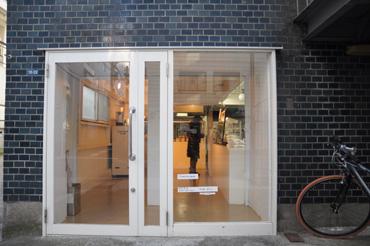
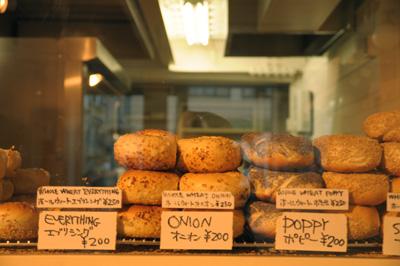
Shop No. 5—A white cube is stabbed into a vintage-feeling building. It made me realize this is a shop where you eat and savor taste and sense along with the bread. I think this must surely be New York, though I’m someone who has never been to New York. But I also think that even if you went to New York, you probably wouldn’t find a shop like this quite so… There’s a white linoleum floor, white furniture, white walls—classic…

Discuss this article ↗

Eating dōbanjiang (豆板醤)

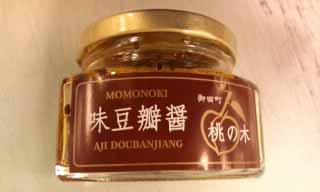
When I was “browsing at Kashiwade ISE” (かしわでISEブラしてたら), something called “eating dōbanjiang” (食べる豆瓣醬) showed up, so I bought it to try. The ingredient list for the eating dōbanjiang includes Maruhon pure sesame oil (マルホン太白胡麻油), sakura shrimp (桜えび), dried scallop adductor (干し貝柱), chirimen j aco (チリメンジャコ)… Reading it, it feels closer to XO醬 than to “eating rayu (食べるラー油).” When I tried it, because of the shrimp and dried scallop adductor, it has a savoriness with a chewy bite. Just like XO dōbanjiang. It’s delicious. Long ago, Mr. Tetsujin Chen (鉄人の陳さん) had… dō…

Discuss this article ↗

001. Dominique Subron of Le Boulangerie Dominique Subron

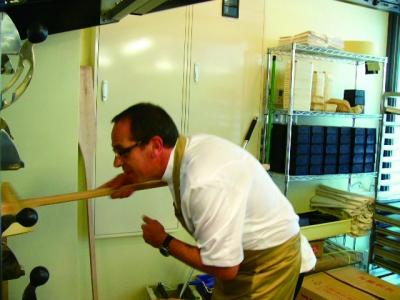
It was when Dominique Subron himself did a demonstration for people in the media, removing a baguette from the oven. Each baguette—grasped one by one, the size of his hand. Even taking into account that he’s French, it was something worthy of staring at in amazement. I had already spent several hours together with him, yet until he started baking bread I hadn’t even noticed…

Discuss this article ↗

At the promised place

In the Edo period’s old maps, the Tokugawa shogunate concentrated major power in five places (in today’s Tokyo). It was Meguro, Mejiro, Akame… Aoto? Ginza…? Or was it Meguro, Mejiro, Akasaka, Aoyama, and Ginza? I heard a story like that. Through connections, this is the fifth year since we started a shop in Mejiro. Supported by all kinds of people, we’ve somehow been able to bake bread up to today. The writing in someone’s…

Discuss this article ↗

I started interviewing bread craftsmen

Starting tomorrow, on an irregular basis, I will post dialogues with bread craftsmen on my diary. I’m much later than planned, but I’m planning to interview the bread craftsmen I’m curious about from various angles. Please send your opinions, impressions, and requests to the blog’s comment section or Twitter. Please look forward to it.【D】 (I’m going to meet the bread craftsmen I want to see!) J

Discuss this article ↗

Pan Lab No. 27—Kyoto Prefecture / Shiga Prefecture (Mail-order edition)—On sale today!

In today’s release, “Panic 7 Gold” March issue (on sale tomorrow!), Pan Lab No. 27—Kyoto Prefecture / Shiga Prefecture (Mail-order edition)—is being featured!! It’s the fifth time for the mail-order edition, but with each installment, I’ve been gradually understanding just how interesting the mail-order edition is. Among the bakeries in Kyoto Prefecture and Shiga Prefecture, we select shops that can be used for mail-order. For one theme… each one…

Discuss this article ↗

The scenery of Pan Lab No. 27—Kyoto Prefecture / Shiga Prefecture (Mail-order edition)

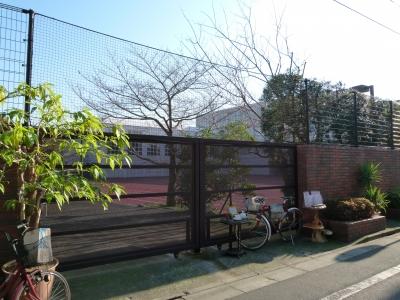
The Pan Lab featured in the first issue released in 2011, “Panic 7 Gold” March issue (on sale tomorrow!) was held in December 2010. This time, it’s mail-order bread from Kyoto Prefecture and Shiga Prefecture. In the mail-order edition, we’re traveling from south to north. The road in front of Kaijūya. I had only been looking to the right, but only now did I realize that the left side was also a good feeling. The shadows on a clear winter day are deep. Mr. Ōno was looking for a vessel…

Discuss this article ↗

L’atelier de Joël Robuchon meeting

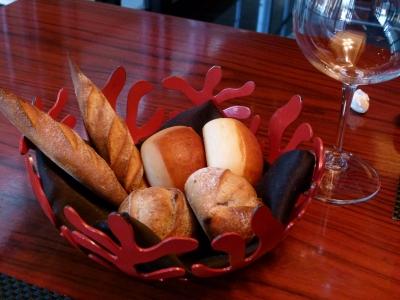
When you’re about to talk about something important, you can’t go wrong with eating something delicious. I went to meet with Pshi and Kashiwa-shi along with them. So that we can talk about things like the future of Bread Lab, as it says in the diary from the day before yesterday. The location is L’atelier de Joël Robuchon in Roppongi. First, the basket of breads that came out. Baguette Robuchon in bite-size portions, pain au levain, and pavé. When the breads came out, Tensi…

Discuss this article ↗

Bäckerei Brot Zeit

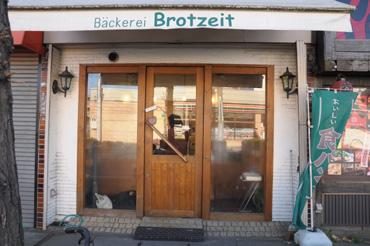
On the third stall, in Urawa’s outskirts, in a place called Nishi-Urawa, there was an amazing bread craftsman. Chef Miyabayashi of Marindō said, “I don’t really meet a bakery around Tokyo that impresses me, but Bäckerei Brot Zeit is the one that’s good,” and it’s not exactly a lie. It was the first time I’d seen a shop where the oven and the cash register are this close. This chef runs the shop all by himself.

Discuss this article ↗

To set off on my adventure around 200 Tokyo shops

As for “Around the World in 80 Days” or “Midnight Express,” anything is fine—what always goes with books of travel and adventure is whether you can make it to the finish safely, or whether you live or die, and that thrilling, hair-raising feeling; and I’d been thinking that I want to put myself in a place like that, and yet I’d been lounging around at home for years. Actually, already for about the past two days, right in front of blog readers, depending on how you look at it…

Discuss this article ↗

Ishigama Bread Workshop Dan-ya

The second stall: Dan-ya, a bread workshop in a residential neighborhood in Saitama. A cozy selection of breads—sandwich loaves, savory breads, and sweet breads. Every bread is a little sweet, seasoned in a way that’s easy to get children interested. From the standpoint of security, something I definitely want to call attention to is the alluring box (upper photo) that’s placed right at the spot immediately after you enter the entrance. Inside it, a large quantity of koppe breads and…

Discuss this article ↗

Le Petit Mec baguette

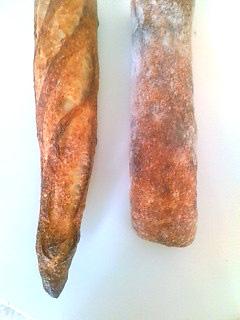
Le Petit Mec has two kinds of baguette. The left is a baguette, and the right is a baguette rustique. The left is a baguette whose aroma you eat—the skin is everything. The impression at the moment you smell the aroma before you eat is almost the same as the impression after you’ve finished eating and swallowed. The sweetness of the baked-in crust. It’s like pain au seigle, but an even more transparent sweetness. It’s that sweet aroma that you really taste…

Discuss this article ↗

The beans of gum bread and Dunkin’ Donuts

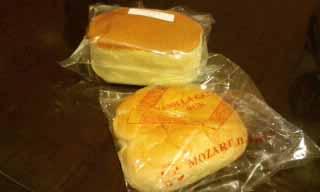
Bread from MOZART BAKERY in Kashiwa. The vanilla cream bread in front. The honey castella bread in the back. This is a sweet bun in Guam, like ABC Mart’s sweets that are everywhere like bamboo shoots after rain. The simplicity of the package is refreshing, and it feels like freshly wholesaled goods from a local bakery. Take a bite. As expected, bread is moist and has weight. Something sticky that seems like it would cling to the back of your teeth (though it doesn’t actually stick) and…

Discuss this article ↗

Not a sane thing to do—so good it makes you cry!! New Niigata “sasa dango” bread

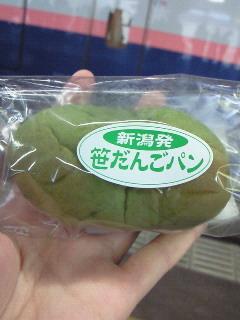
The New Year’s mood has completely worn off, and it’s “days when you eat urban bread in the world’s largest megacity TOKYO” (lie). As I wrote in my diary the other day, I was in Niigata for the year-end and New Year holidays, but on the way back, inside the ticket gates at a shop at Niigata Station, I discovered something called “sasa dango bread,” and I couldn’t help but let out a voice. With how faint its presence was…!! In the tone of speech I’d gotten used to at the register, I said, “The sasa dango are put in as-is, so please hurry—”

Discuss this article ↗

パンラボ · 朝日新聞「このパンがすごい!」