Blog

2,490 articles / Newest first

2009 / 10

The Scenery of Pan Labo 4: Melon Pans

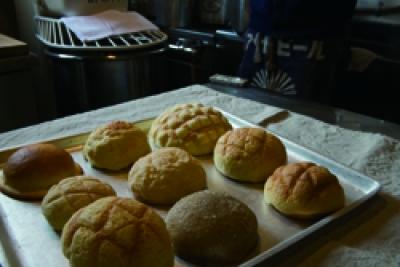
Pan Labo 4 was held in the February 17, 2009 issue of Panic 7 Gold, April issue (“パニック7ゴールド 4月号”), released on February 17, 2009. The theme was melon pan. This time, we selected as “melon pan” those with cookie dough layered over the surface of a sweet bread. Nine kinds of melon pan. Top row (from the right): Seven-Eleven’s Baked-to-Order Direct Delivery Melon Pan (105 yen); Milk Roll’s Melon Pan (55 yen); Boulanger—

Discuss this article ↗

Green Boulangerie Shop (ベーカーショップ グリーン)

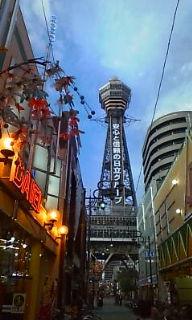
In Osaka. There’s a retro place called the Dotonbori Shoten-gai. (It’s about nowhere near Tsutenkaku—just in case.) It seems that even at the center of Osaka, this was one of the few areas that escaped damage from air raids, and many natural, wooden buildings remain in the shopping street and its surrounding area, and even have been renovated into cafés. But what draws you in isn’t so much those fresh-looking things as fermented products with a seasoned, “burnished silver” quality. At the shopping—

Discuss this article ↗

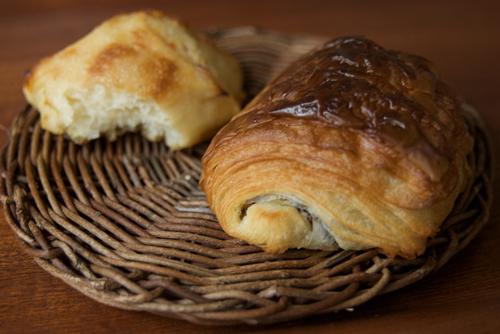
Chocolate-Craving Chocolate Croyssant

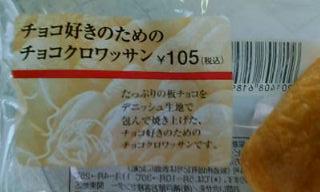
For my wife. Since we got married, you may sometimes go days without eating gohan, but I’ve never seen you not eat chocolate. Even on the day we went to stay at the monastery, you were still debating right up until just before departure whether to take chocolate with us. I think you must be moving by using chocolate as fuel. Today, when I stopped by FamilyMart, I saw they sell a bread like this—

Discuss this article ↗

Dominique Saubron

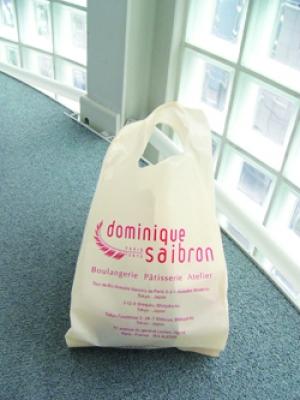
Dominique Saubron had the image of an upscale bread you couldn’t buy unless you lined up at Akasaka Sakasu, but somehow it ended up opening in Shinjuku Sanchome, and it also opened at the Tokyu Toyoko Store at Shibuya Station. It’s convenient to be able to buy it anywhere, but there are times when, even if it’s delicious, the sense of gratitude or “something special” becomes thinner (like Maison Kaiser). But Dominique Saubron is—

Discuss this article ↗

Andonuts from Yamaguchi Seika (山口製菓のアンドーナツ)

At the station building in Iidabashi, there’s a supermarket like Seijo Ishii, called Miuraya. Instead of having you fill your own items into a grocery bag at the register, the second clerk at the register puts them in for you. It’s a bit embarrassing—this is what you’d call a high-end supermarket. When you look at the bread corner, it’s very lively. Yamazaki and PASCO aren’t really stocked. There’s bread from their own brand, Miura Bakery (三浦ベーカリー), and besides that—

Discuss this article ↗

Carrefour

On the Tokyo Metropolitan Expressway Bayshore Route at night, somewhere where you can see Makuhari Messe, when a sign with the word “Carrefour” came into view… I suddenly remembered a certain unverified piece of information that I’d once heard about at some point and which had long since drifted off into the distant beyond of my brain cells. “Carrefour’s bread is delicious.” In the French countryside suburbs, this supermarket is the sort of place you can say you almost always end up encountering, and it has entered Japan with a big fanfare—

Discuss this article ↗

Cream Pan from Hattendo and Thanks

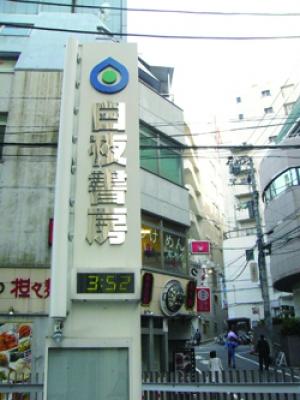
In front of the Hakuyō Bookstore company headquarters (白夜書房本社前). A relaxed, mellow atmosphere flows through the afternoon. “Ohh—so this is what Hakuyō Bookstore is like!” 15:52, right, yes yes. There’s even a clock. “Ah, and behind there is the Chinese restaurant chain Rinchaji (陳麻家).” “Oh.” …… “Wait—what’s down at the bottom left!!” An aluminum tray I’m used to seeing at Pan Labo! Something is on top of it! What is it? What is it supposed to be? Is it bread? What kind of bread is it?

Discuss this article ↗

Leurre à la Chocolat again. A Rêve-Rêve and lemon anpan

When I was time-tripping from Kashiwa to Changan? (Present-day Xi’an), I was suffering in a bread-related trip. I may have confidence in mindlessly snacking on things, and even confidence in vibrating my tongue at high speed to scan what I’m eating—but I learned that I don’t have the power to taste/recognize what it is with my tongue after I’ve snacked on it. The other day, I was delighted by the exquisite combination of raw custard and chocolate that I bought at Troisgros (トロワグロ)—

Discuss this article ↗

Hitotsubudō

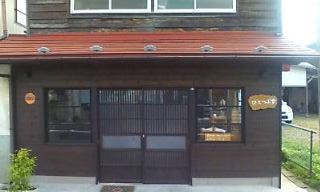
About an hour north from Sendai there’s a small town called Iwadeyama (岩出山). It’s a local-line station where trains only come about once every hour and a half. While I was walking while looking at the map, it seemed like the first townsperson asked, “Where do you want to go? Want me to show you?” It had a calm, peaceful feel. When I walked along the main street, I found a bakery. A shop called Hitotsubudō. They remodeled an old folk house into—

Discuss this article ↗

Sendai Bread Tour 2: Gatō-kan (ガトーかん)

In the outskirts of Sendai, Sendai Asakusa (仙台浅草). Apparently it’s called that because there are small, tiny Kannon halls like Hokora (ホコラ). Indeed, it’s like Asakusa in the sense that the illustration’s kitch-like vibe and the feeling that it used to be more prosperous but is now run-down makes it feel like Asakusa. And there was a shop called Gatō-kan (ガトーかん). This place, too, is the kind of sweets shop that bakes bread. The illustration on the wrapping paper is wonderful. Long ago, in the evenings on TV—

Discuss this article ↗

2009 / 09

Sendai Bread Tour 1: Sabun (佐文)

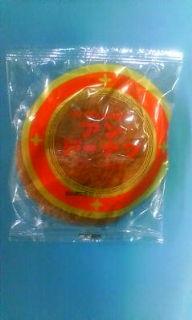
Ni-hāo, I’m in the capital of Changan right now. It seems that in Sendai there aren’t many pure bread shops, and instead there are lots of places where bread is also placed as part of a sweets shop. Is that the same kind of feeling as in France, where a patissier makes both bread and desserts? In some nostalgic kind of shop, they even sold bread like this. It’s a peanut koppe (ピーナッツコッペ), but it’s decorated in a way that makes it look a little like a decorated cake—something like that, and since it’s—

Discuss this article ↗

The Scenery of Pan Labo 3: Pan de Campagne

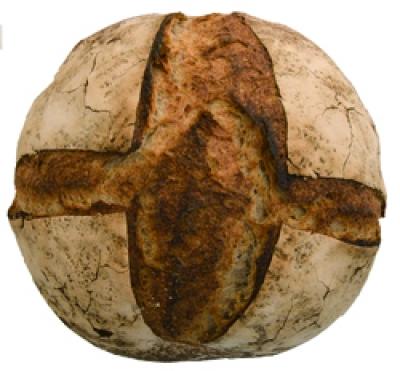
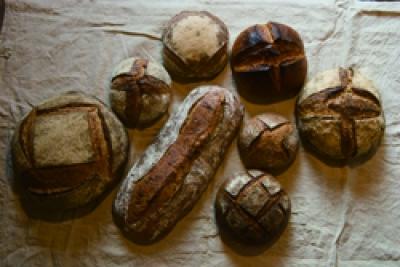
Pan Labo 3 was held in the “Panic 7 Gold, March issue” (“パニック7ゴールド 3月号”), released on January 17, 2009. The theme was Pan de Campagne. From the things sold by bread shops as Pan de Campagne, we choose the simplest types as much as possible. From the upper right, going left: Le Vain’s Campagne (1 yen/1g); Maruzeit’s Rye Campagne (1260 yen); Ticke—Bak—

Discuss this article ↗

A Nanchatte (Fake) Local Burger Tour: Gunma Prefecture edition

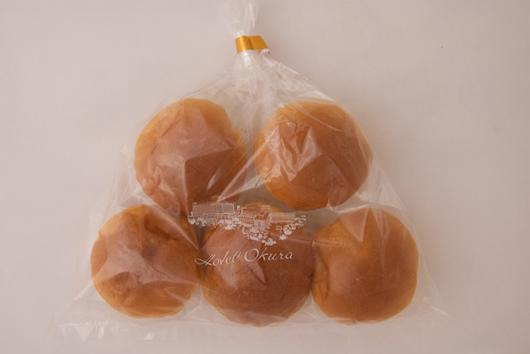
I really want to go to Le Coppedō, but Kashiwa keeps deflecting me and never tells me where it is. So I decided to make it myself. The roll bread from Hotel Okura that I bought at the department basement (depa chika). Its round shape is cute. It’s sweet, crisp, and honestly it’s pretty good. Somehow, I thought that the flavor of Le Coppedō’s bread is probably like this. Cut this in half. Take—

Discuss this article ↗

Le Petit Mec Tokyo

Le Petit Mec, a famous Kyoto shop, appeared at Marui Shinjuku with lots of fanfare. Among the staff members wearing uniforms and white coats, there was a man in a casual shirt, and that person was Chef Nishiyama. Why, even though he’s the chef, isn’t he wearing a white coat or a chef’s hat? It felt a little strange. “The kids in Tokyo are really on a whole other level. They’re—much better at making bread than I am,”—

Discuss this article ↗

Sandwich Parlor Matsumura (サンドイッチパーラーまつむら)

What kind of a place is a “parlor” supposed to be? In the past, I had a firm understanding of it and never wavered. That is, it’s a place where you eat parfaits and drink cream soda. I think shaved ice was called a flappe (フラッペ). Shaved ice = food of the common people, flappe = France, upper class—those were baseless assumptions. Even though I’m actually also middle class, I forcibly—

Discuss this article ↗

Kaijuya’s Pan à la Fruit (パン・オ・フリュイ)

On Wednesday, in front of Kaijuya at dusk. Somehow it looked like customers were gathering from somewhere. Around after 17:00, several kinds of bread were lined up in the showcase. Today, I slipped out of work and came here because I really wanted to eat Kaijuya’s Pan à la Fruit. Oh, oh—there are also zōri sandals being sold. Bread, and zōri at a bakery. This is my first time seeing a scene like this—

Discuss this article ↗

Studying Pan au Fruit (Pan・オ・フリュイ) — VIRON & Robuchon Edition

The seagale fig (seagel fig) from VIRON looks kind of like an ostrich egg. It’s not egg-shaped, but the way it stands there makes it look that way. It’s sturdy, rough. Its curved surface has been honed to sharpness, making it seem unapproachable. When you bite it, it’s truly as tough as an ostrich egg. But it isn’t the hardness of an old bread; it’s a fresh hardness. You put your teeth in and, the moment you think, “Is it hard?”—it cracks and the dough sinks down with a kind of “gooo…”

Discuss this article ↗

The 11th Panlabo — Scene from Pan au Fruit (Pan・オ・フリュイ)

Mii-n, mii-n, mii-n, mii-n, mii-n…. On some day in August, in the afternoon, photographed from in front of Kaijuya in Mejiro, Tokyo. The 11th Panlabo — Pan au Fruit (Pan・オ・フリュイ) — featured in the “Panic 7 Gold” November issue, which came out the day before yesterday, was held at the height of summer. It was the kind of hot day where the sun seems to cling to your whole body and won’t let go. First, shooting outside. Under natural light, I photographed one by one…

Discuss this article ↗

Chikuwa Bread

I first encountered and ate the chikuwa bread that people talk about with the kind of “kashiwa” (maybe) twist. This is what the rumor is about. http://www.excite.co.jp/News/bit/E1252582234547.html This is the one I ran into. A chikuwa bread shaped like a whole single piece, like a huge agé (deep-fried) on the seashore (isoribe-age). It’s a little different from the buzz-worthy chikuwa bread; with this one, the bread is thin. A thin chikuwa with cheese cream inside, and on top of that…

Discuss this article ↗

パンラボ · 朝日新聞「このパンがすごい!」