Blog

2010 · Bread & culture · 113 articles / Newest firstClear filters

2010 / 12

Signifier and signified

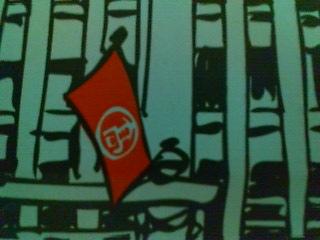
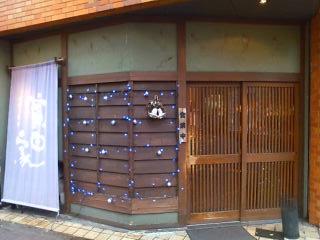
Signifiant signifié (シニフィアン・シニフィエ) at Takashimaya in Nihonbashi. “Signifiant signifié” is a term used in linguistics. The thing that signifies is the signifier (シニフィアン), and the thing that is signified is the signified (シニフィエ). For example, if the word “ringo” (“apple”) is the signifier, then the red round fruit itself is the signified. So why did Chef Shige Katsuei Shiga (志賀勝栄) make such a complicated word the name of his shop?

Discuss this article ↗

Tried my long-cherished Stollen

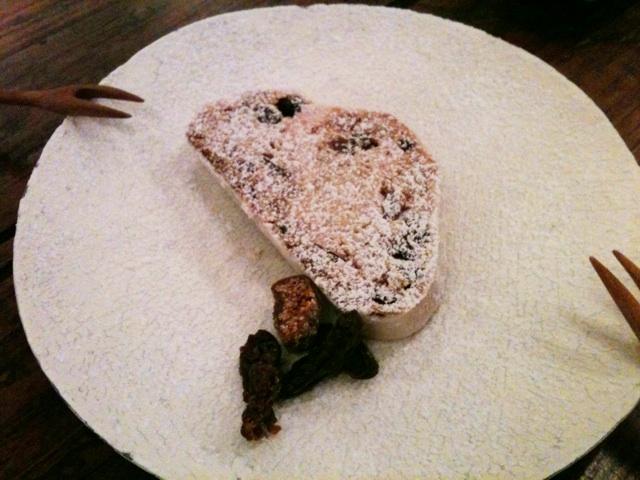
I ate Stollen at a totally unexpected timing. I’d already thought Christmas was over and that I wouldn’t be able to eat it, so I was very happy. A cut Stollen and dried figs, dry as they were, were brought to the plate. When I looked closely, powdered sugar had piled all over the entire plate, so much so that I was tempted to lick it “Pell-pee-pee”… (but it was far too rude, so I stopped). A little—fork…

Discuss this article ↗

A masterpiece by that Pierre Marcolini—Choco Cargo!!

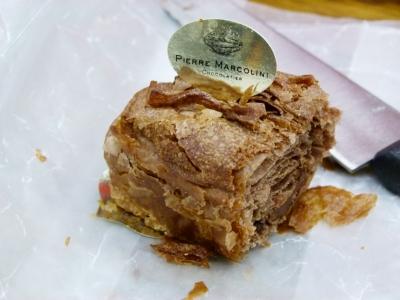
In the morning, Choco Cargo was sitting on my desk at work. Kashiwa- de brought it for me. Now that I think about it, Kashiwa-de doesn’t seem totally unlike Santa Claus. At any rate, just being able to have Pierre Marcolini’s pain au chocolat in my mouth first thing in the morning made me feel more in the Christmas spirit. The taste is quite bitter, just as Kashiwa-de said. The one I ate was the Choco Cargo Orang…

Discuss this article ↗

Hamaday-ya

In terms of the concept of “Japanese taste” (wa taste), it seems like Hamaday-ya doesn’t allow any other shop to follow along at all. It exists, yet it doesn’t. It looks as though you could copy it, but you can’t. I can feel the power of those origins in every dough of Hamaday-ya’s breads. Even though it’s on the sweeter side, it feels completely natural—almost like the very taste of wheat itself. There’s a hint of nostalgia within the aroma of the yeast. The texture is quite moist and…

Discuss this article ↗

The 26th Pan Lab ~ Chocolate ~ Released Today!

“Panic 7 Gold February issue” Released Today!! The 26th Pan Lab ~ Chocolate ~ is featured. I think the theme of chocolate required quite a bit of stretching. Because they only set up a frame for “bread with chocolate in it,” every bread dough collected this time—from korone, to baguettes, to rustic breads (l’ustique), all the way to bagels—was different. At first, the dough was different… each was different.

Discuss this article ↗

The 26th Pan Lab ~ Chocolate ~ Scene

A cold day in mid-November. At Kaiju-ya, where the 26th Pan Lab was held, a variety of breads with chocolate were gathered. Theme: “Chocolate.” A few months ago, it was a theme we put on hold due to a heat that was beyond what we imagined. Could it be that the point is that it’s “chocolate,” not “choco-bread”? If it has chocolate in it, they gathered any and everything without discrimination…

Discuss this article ↗

2010 / 11

A permanent keepsake!! Fuji no Ki Pan retrospective

Ever since I saw Mr. Project de Lande’s diary the other day, I couldn’t stop wanting to go to Fujinoki. I’d heard about it again and again even from a year ago, and I’d eaten bread there too, but this was my first visit. When I stepped into the town of Fujimidai, I felt a little awkward, like “sorry,” kind of. That kind of feeling—when you go visit a friend’s place and unexpectedly end up being treated to dinner—

Discuss this article ↗

Takase (The Journey to Local Breads in Toshima Ward 2)

It was somewhat similar in meaning to Chieko’s remark that, “Tokyo has no sky,” but I had written previously (in the Kameido miso bread article) that “there are no local breads in Tokyo.” I need to quickly retract how shallow that understanding was. Even on top of Sunshine 60, there is a blue sky—and with so many streets and alleys packed into this vast Tokyo, it’s only natural that there are breads known only along the paths they travel, and they—

Discuss this article ↗

The Road to Completion for Local Breads in Toshima Ward

In a recent article, I impulsively and carelessly wrote about having this grand ambition to make local breads in Toshima Ward and compete in the 2nd Local Bread Festival. About a month has passed since then, but I wasn’t just sitting around—I was lying around at home, thinking and continuing to ponder whenever inspiration struck. And now, I’m somewhat regretting what I said. “I wrote that I would make local breads in Toshima Ward,”

Discuss this article ↗

A Big Feature on Coffee and Bread

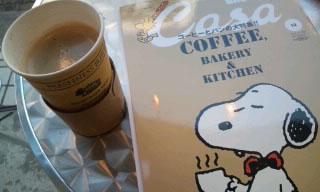
I read Casa BRUTUS’s big feature on coffee and bread.!! What was wonderful about this book was that it features coffee and bread separately. Inside my own head, there’s no concept of “pairing things with coffee so it tastes good,” so reading each of the separate features was easy. True to the Casa style, the beginning is in a foreign country (the West Coast), and it’s also the kind of thing that makes you want to visit right away—

Discuss this article ↗

Small Yaki-soba Bread

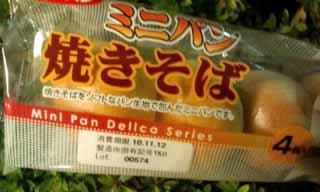
When I was, as usual, bread-browsing in the supermarket at Kashiwa, the characters for yaki-soba suddenly jumped out at me. (I’m the type who reads the package too. Besides, in supermarkets it’s 95% a blind buy based on the jacket. Wow.) Jacket(s). There are about four small breads sold in a pack, but most of them are the likes of anpan or cream bread. Dainichi First Bread’s mini bread for yaki-soba. http://www.da

Discuss this article ↗

Feeling a little excited about the Christmas specs…

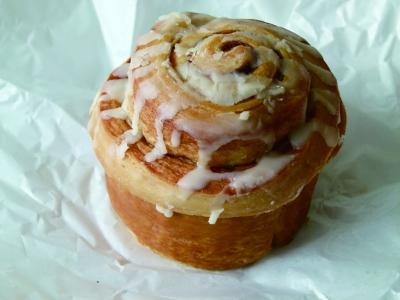
For work on “Panic 7 Gold Issue January,” my blog is a bit out of sorts… (Sorry every time). For a treat for the eyes, I’m UP a photo of a cinnamon roll that’s harmless enough. If you eat in, you get a heavy fork and knife, and you can really eat it in a grand way—but (for details, see the customization battle among the people at Pan Labo) in the case of takeout, it’s a light

Discuss this article ↗

Three-color bread from Minna no Pan-ya

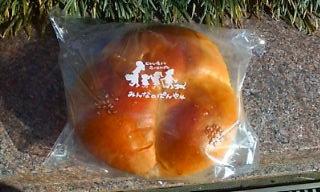
The moment you take a bite of Minna no Pan-ya’s three-color bread, it seems like many of the issues surrounding sweet-bread dough get settled. That sweet aroma, that balance of lightness and chew—maybe that’s the greatest common denominator of what people want in sweet breads… “Exactly like Minna no Pan.” There’s a way of living like three-color bread. Not one, not two—somehow you end up choosing three in your life, and there’s that.

Discuss this article ↗

2010 / 10

HisuI bread (Bread 9 from the Local Bread Festival)

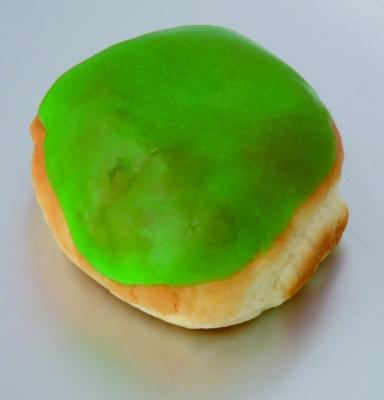
When I learned the results of the Local Bread Festival—first was yōkan-pān and I knew it was third place—and “Hisui bread, what’s going on?” was the first thing I thought. Using the same concept but not red bean paste; it’s yōkan. And apparently, back then, they also called it “yōkan bread.” Even the unusual green color is part of what makes it like a local bread that competes on uniqueness. The butter scent that gets scattered around makes it feel like an old-fashioned, quintessential bag bread, the kind you can practically imagine from long ago—

Discuss this article ↗

A feature on Nobuhiro Yamaguchi in “IDEA”...!!

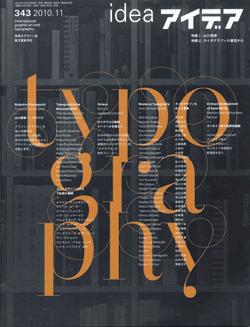
We’re letting you know that Nobuhiro Yamaguchi, who designs for Pan Lab, is featured in the front matter of the design magazine “IDEA” for 42 pages. In addition to having the works he has worked on up to now introduced with color photos, his thoughts on typography are also written up in an interview format. Each page has a different paper thickness and texture, and as you rapidly flip through—

Discuss this article ↗

Kobe beef curry bread (Local Bread Festival bread No. 5)

Hyogo Prefecture, home to Kobe—said to have the highest consumption of bread in Japan. In the Local Bread Festival as well, it boasted a substantial number of entries, and it was only at the Hyogo Prefecture booth that four companies each brought their local breads and gathered together in a “misery makes strange bedfellows” kind of scene. The Kobe wine bread from Danmarche, whose head office is in Akashi. They say that Akashi also has something called “takopan.” You could almost call it a local-bread city.

Discuss this article ↗

Bread that captivates female high school students in Tokyo

Miso pan. This is a bread from Anjerica in Shimokitazawa. I heard from Mr. Kashiwa that the female high school students who passed in front of the shop were saying things like, “This miso pan is super delicious, ne!!” Just imagining Mr. Kashiwa crouching a little to eavesdrop on it is already funny, but anyway—couldn’t this be the sort of remark you can’t afford to let slip!! This isn’t just something said by ordinary female high school students—

Discuss this article ↗

Pan Calendar 2011

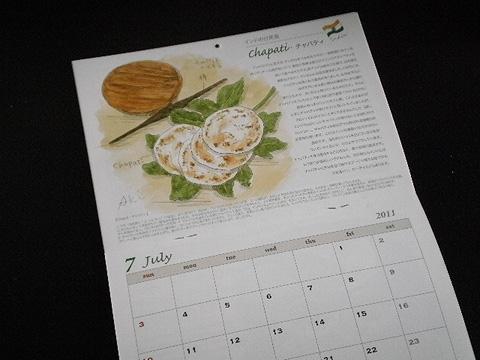
After the summer that was too hot and lasted too long ended, at last the season for appetite came. This past summer, I had been taking shelter at the foot of Mt. Yatsugatake in my hometown, but as for the bread, I ate it “properly” every day. Yes, I was eating the coppe bread for school lunch that they bake at my parents’ house—every day… . The freshly baked coppe bread tastes good, but if you have it day after day, and for more than a month, you inevitably get tired of it. Still, at 5 p.m., when the bread factory was finished—

Discuss this article ↗

Meeting* bread (Local Bread Festival bread No. 3)

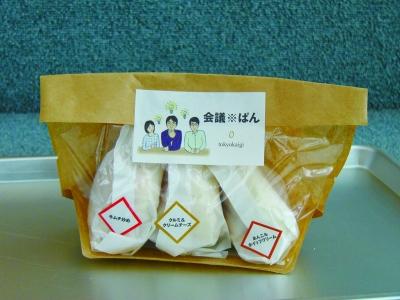
“Kaigi pan” (please see D-sang’s article from the other day for reference) was born from TV program “Tokyo Kaigi” by TV writer Kaodo Koyama (BS Fuji). It’s not a bread made by a bread craftsman; it’s bread made by a planning/design company. Because of that, I thought that rather than the bread itself, it was bread assembled by building it from around the outside—by the time you get to naming it, packaging it, giving it its shape—everything. It’s a size where you can finish eating it in two or three bites. It’s—

Discuss this article ↗

Au Bon Coin

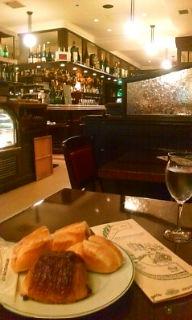
Au Bon Coin seems like a Parisian cafe. More than being similar, it’s hard to tell what’s different. If I had to point out one thing, it’s that Paris cafes are dirtier, and often cigarette butts—one or two at a time—are casually thrown down. The pattern of the tile on the floor, the curves of the corners of the counter that are edged with golden metal and designs, and even the wooden chairs, with frosted glass screens covering the gaps between seats—

Discuss this article ↗

パンラボ · 朝日新聞「このパンがすごい!」