Blog

2011 · Wheat & farming · 58 articles / Newest firstClear filters

2011 / 12

Low/Rowan Montagne (Prince)

No. 130 (An Adventure Touring 200 Places in Tokyo) This shop is a local bakery that anyone can drop into casually. On the natural yeast, domestic wheat bread shop that people often say is “hard to eat,” customers of a wide range come flocking in—from elderly people to salarymen, to housewives. Hard-type breads, sliced bread, anpan, curry bread, and Danish pastries. All of them are absolutely no inferior to yeast-based breads in the least,

Discuss this article ↗

AOSAN Bread Story

The lightness of that strange dough, like it has surpassed the very substance/physical feel of AOSAN bread. The beautiful fragrance of fermentation. The flavor seeps out every time you bite into it. The line of people waiting for the baked loaves of kakushoku continues in front of AOSAN’s shop again today. How was it created? After working at a Western confectionery shop, Mr. Okuda trained at the famous bakery of homemade yeast, “Luvan,” and opened AOSAN. “In the world of bread...

Discuss this article ↗

2011 / 11

EATALY (Daikanyama)

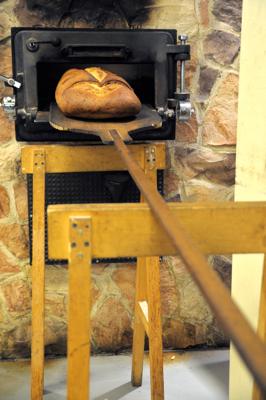
No. 128 (An Adventure to Visit 200 in Tokyo) Eataly, the largest Italian food retailer in Japan. Inside the 23 wards, it’s rare to find a brick bread-baking wood-fired oven in the store. Just like an electric oven, it’s not that the oven’s temperature automatically rises to the preset level just because you press a button. You feed the firewood, keep an eye on the oven constantly, and use your instincts to bring the bread to the desired finish. Chef Takeda says, “The thermometer is—”

Discuss this article ↗

Bread Workshop Kazamidori (Higashiurawa)

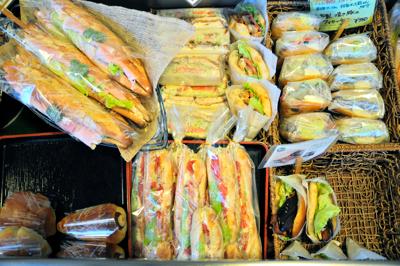
No. 125 (An Adventure to Visit 200 in Tokyo) The first thing you notice when you walk into the shop is this. Light pouring down from a high ceiling illuminates the many sandwiches lined up in the refrigerated display case in a riot of colors. The breads in this shop are giving off light. When you go to Kazamidori, you have to go hungry—or you’ll regret it. There are too many breads I want to buy. Not a single one is ordinary bread—

Discuss this article ↗

The 37th Pan Labo ~ Wheat ~ On Sale Today!

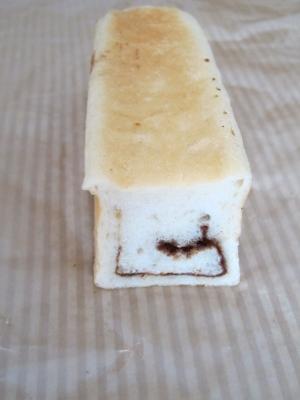
Yamakaku’s black sugar cinnamon roll. A long, slender bread with cinnamon swirling in a spiral. In Mr. Ikeda’s diary, the sandwich bread sounded delicious, but this one is a must-eat as well. I slice it to about 1 cm thick, freeze it, and when I want to eat something sweet, I thaw it and eat it. It tastes more like nicci than cinnamon. The package bag has a cute and considerate illustration designed on it! Steamed bread makes—

Discuss this article ↗

Mitsui Seipan Shop (Ochanomizu)

No. 124 (An Adventure to Visit 200 in Tokyo) Just a little down a side street from Akihabara’s electric-town district, there’s a slice of this kind of hometown atmosphere left. Not a business district, not a commercial area, and not a residential neighborhood either. You find private homes, long-established dining places like Japanese tea houses, and craftsmen’s workshops mixed together. It feels like you can sense that all of people’s daily workings—sleeping, eating, working, being glad, and being sad—are quietly carried out in the town’s back area. Right in the—

Discuss this article ↗

A fog in the mind

I went to interview someone in a wheat field. That person has been working on natural farming for many years. In rice paddies where no pesticides are used, there are frogs, birds, living things, and all kinds of grasses and flowers. When it’s time to follow the government’s rice reduction policy and the rules of the village, they go against them. They’ve grown wheat and rice by following only their conscience, paying no attention to making money or taking it easy. “When I inspected for radiation, it came up—just a tiny amount,” they said. The country’s standard is 500

Discuss this article ↗

La Saison de Pan (Musashi-Kosugi)

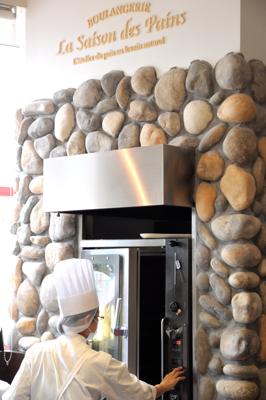
What is the 123rd shop (an adventure巡る 200 shops in Tokyo) about a baguette? All French-bread craftsmen keep pursuing the answer with their own hands and their own tongues. And with the answer they’ve finally found, they bake a baguette that is only theirs. One of the people who managed to lead to the most convincing answer among all those craftsmen is Éric Kayser. His baguette captivates the people of Paris, and in Japan, too…

Discuss this article ↗

2011 / 10

Kyodosha (Tatesukabe)

Shop number 121 (an adventure巡る 200 shops in Tokyo) People with disabilities make bread. One of the pioneers, Kyodosha, started 21 years ago. “At that time, people thought, ‘People with intellectual disabilities can’t possibly think.’ ‘You can only do simple work.’ It was all things like assembling ballpoint pens all day long, folding dish towels, things like that. Only things like that,”

Discuss this article ↗

LDK (Hiyoshi)

Shop number 120 (an adventure巡る 200 shops in Tokyo) Small bakeries are often run by a husband and wife. The husband quietly makes the bread, and the wife greets customers in a bright way. This LDK is definitely a husband-and-wife bakery too, but the roles are swapped. The husband handles customer service; the wife makes the bread. The owner, Yuotsune Makita, welcomes customers with a really good smile. “Both of us are… a bakery…,”

Discuss this article ↗

Otto pan (Ebihara-cho)

Shop number 119 (an adventure巡る 200 shops in Tokyo) On October 8, it moved from Yutenji on the Tokyu Toyoko Line to Nagahara on the Tokyu Ikegami Line, and reopened after renovations. “In front of the park, close to the station too. For a small shop, a place like this is the best.” That was Chef Toshihiro Kouchi. There’s a reason for a small shop. “It’s just me who makes it, and during busy hours I also sell it. From the beginning to the end, I keep my eyes on it,”

Discuss this article ↗

Spica Wheat Ear (Hatanodai)

No. 113 (An Adventure Touring 200 Shops in Tokyo) Even things that are commonplace everywhere now—there would be none of them if pioneers hadn’t repeated effort and trial and error. The same is true for homemade yeast bread. Nearly 30 years ago, when Yasuji Noriya decided to make homemade yeast bread with domestic wheat, it was something that wasn’t something he could tell whether it was from the sea or from the mountains. “The charm of… a 吉祥”

Discuss this article ↗

Muur à la Muur (Isehara)

No. 111 (An Adventure Visiting 200 Shops in Tokyo) Muur à la Muur took over Benoîton from the late Chef Yukio Takahashi, who made a name for himself with home-milled flour, and it’s run in the same location (current Shonan Wheat Project). “The base is Benoîton, but I thought up everything myself, except for some parts of the formulation.” It’s not just a shop that runs a bakery—it’s the passion for wheat

Discuss this article ↗

2011 / 09

The current Shonan Wheat Project

Sometimes an instant image catches your heart, and it can end up determining your life. In 1999, when a new shop called Benoîton opened in Isehara, Masakazu Honosugi—who was a high school student at the time—rushed there on a motorcycle from Hiratsuka. “The moment I walked into the shop, the smell of grain was incredible. I thought, ‘What an amazing bakery.’ The bread I bought and ate also tasted completely different from breads I knew. The flavor of the flour was in that

Discuss this article ↗

Showmacher (Ōoka-yama)

No. 108 (An Adventure Visiting 200 Shops in Tokyo) Contrary to its exterior and first impressions, the inner world of rye bread is lively and rich. A huge German stone baroque church is decorated inside with dazzling baroque-style ornaments, as if it were covered in sparkle. The rye bread’s time and the wheat bread’s time are different. In the sense of time for the fluffy, light wheat-bread experience in your stomach,

Discuss this article ↗

Kobaru Biyori (Omiya)

No. 107 (An Adventure Visiting 200 Shops in Tokyo) When I go to Kobaru Biyori, it’s always Kobaru Biyori. When I went for the first time, it was winter—and on that one day it was sunny and warm, so I wanted to stretch my legs and go. The second time I went was a day with intense late-summer heat. From the gaps between the concrete tiles in front of the shop, the clover that had sprouted green was getting sunlight shone down on it, and yet inside the shop was cool and refreshing.

Discuss this article ↗

M-SIZE

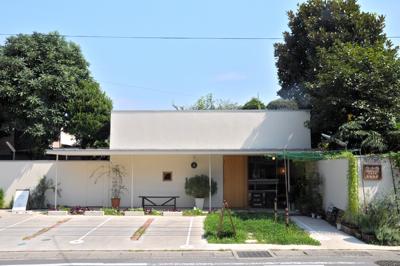
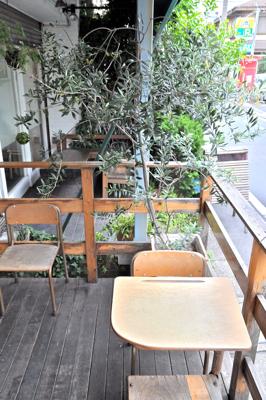
No. 105 (An Adventure Visiting 200 Bread Shops in Tokyo) One summer day, strong sunlight was shining down on the olive trees on the wood deck, and when I stared at those thick, tiny leaves, it felt like I was even in a faraway southern country. The sound of an acoustic guitar ringing out coolly colored the shop’s atmosphere just a little. The wife sells bread. The husband—starting at 11 p.m.—stayed up all night to the next day’s evening…

Discuss this article ↗

Ronchère (Senzoku)

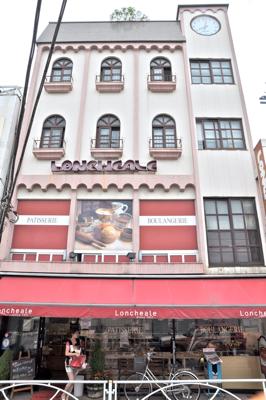
No. 102 (An Adventure Visiting 200 Bread Shops in Tokyo) In front of Senzoku Station, a bread tower stands tall. You enter from the shop, pass beside the register, and spiral up the stairs in the back. Above the next level is a kitchen lined with ovens, and even higher up was a president’s office packed with the history of an old-established shop. When you climb the stairs, it’s like you’re going back to earlier times. Ronchère was founded in… Shōwa 7…

Discuss this article ↗

2011 / 08

Warn Roty (Senzoku)

Number 98 (An Adventure Visiting Tokyo’s 200 Shops) The strength of someone who has an origin. I think it’s because they’re calmly watching the source from which passion flows. Bread is made from wheat. But there aren’t actually that many bread bakers who make their bread from golden-colored wheat grown in the fields. The father of the owner of Warn Roty, Satoko Owada, as a wheat researcher, worked at an agricultural experiment station in Iwate Prefecture. The father opened

Discuss this article ↗

Donna (Makuhari-Hongo)

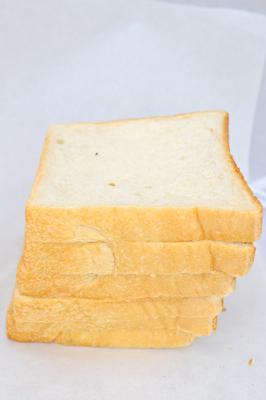
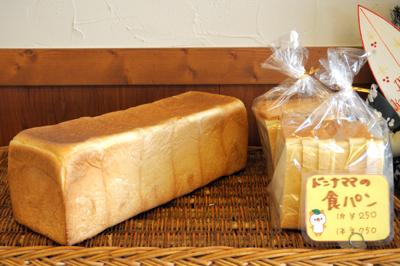
Number 94 (An Adventure Visiting Tokyo’s 200 Shops) The happy sweetness and texture of Donna Mama’s shokupan (250 yen) stayed in my memory from the first time I ate it. It definitely releases the scent of wheat, and when you pick it up, the inside gently trembles. Smooth, soft, tender—so much so it seems to wrap your teeth up. Juicy, with a taste that’s pure white. It’s truly the kind of wheat sweetness that fills your mouth

Discuss this article ↗

Pan Labo No. 34 — Shokupan [Tasting Notes] —

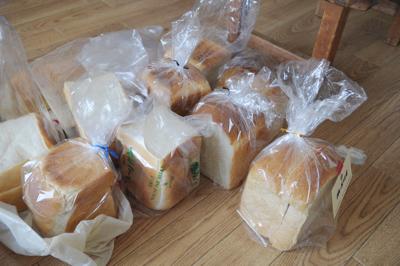
The theme is shokupan. At Pan Labo No. 7, we also covered shokupan, but this time we went even deeper and considered tasting notes. We ate and felt the differences among yama-gata (mountain-shaped) shokupan, kakugata (square-shaped) shokupan, yeast, and natural yeast. Continuing from last year, we borrowed Kaiju-ya-san’s home. Six shops cooperated with us. Half were the same shops as last time, and half were different shops. For foreigners, “こ

Discuss this article ↗

パンラボ · 朝日新聞「このパンがすごい!」