Blog

2019 · Everyday bread · 35 articles / Newest firstClear filters

2019 / 12

From egg sandwiches to cinnamon rolls—about 60 kinds of bread views / Koyagi Bakery

Shelves lined with all kinds of bread—you get on the subway from Sendai Station. Around the time the terminus is getting close, you fly out from the darkness of the tunnel into the light. After just a moment of blinding, the view through the window spreads out. A deep forest—one you can’t believe you were just in the city—that is burning red and yellow with autumn leaves. Sendai, the City of Trees. The place you get off is a residential area built on a hill. On a slope where the rows of houses stop, once again...

Discuss this article ↗

A bread shop that connects the town by Hanako1179. Off to the hidden bakery in Gunma〈Rinascimento Cafe〉. Searching for the “delicious bread” of a soul you keep making with devotion.

A soul—“delicious bread”—that you keep making with devotion. On the brink of a cliff, cornered, you make it with your whole being. What you can feel from Mr. Masahiro Matsumoto’s bread is that kind of mindset only a craftsman can put into it. The shop didn’t even exist. In the era of its predecessor,〈Lincafe〉, the bread he made was loaded onto a kitchen car, and he went out to sell it himself. He parked the car in the middle of a field, but no customers came—no matter how long he waited. While people suspected something, he called out to passersby...

Discuss this article ↗

2019 / 11

The starting point of the “Yanesen (Yaneca-chi) area”! Cute round breads and French bread with crispy skin / Pan in Nezu

Exterior: a lattice window and a board-planked exterior. When you open the sliding door, on a raised platform that rises up from the stone-paved floor, soft-looking breads line up neatly. It’s not quite like a bread shop, but it fits the image of the town of Nezu perfectly—a Japanese-style tasting place. And its name, unmistakably, is “Nezu no Pan.” There are lots of cute round breads. Just from the look, you can imagine a melt-in-your-mouth texture. In the middle of them...

Discuss this article ↗

Breakfast’s centerpiece Part 2: “Coffee”—By the roaster, Kenji Okauchi

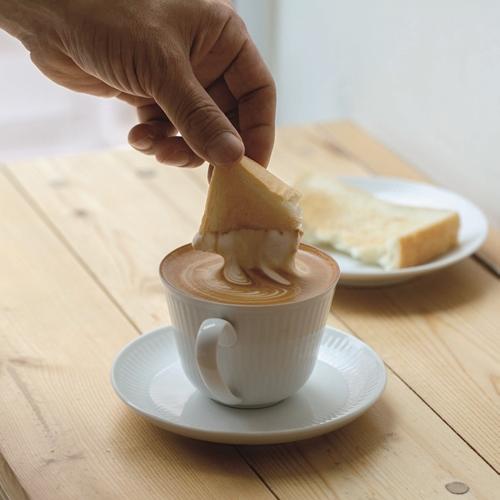
From Part 1, right here. The coffee paired with bread focuses on drip and mariage. Dip toast in café au lait. Take the carefully poured café au lait, attach a torn piece of toast to it, and bring it to your mouth. The aroma of the coffee and the aroma of the crusted surface meet in the white interior—milk and the white inside of the bread. With a pairing like this, you don’t even need butter or jam. It was at a morning activity event where we enjoyed pairing bread with coffee.

Discuss this article ↗

Breakfast’s centerpiece Part 1: “Bread”—By PanLabo, Hiroaki Ikeda

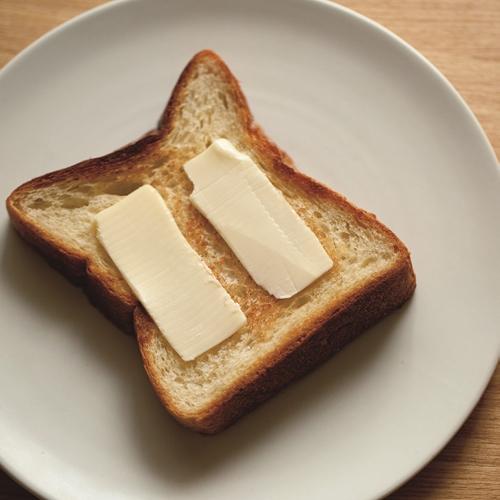
Me, who eats bread to my heart’s content, the way I eat and bake it every morning. My ideal toast is “crispy on the outside, molten in the middle.” What makes something delicious is coexistence of separate things. For toast, if it goes well, the surface is crispy and the inside is fluffy and chewy; when it works, it becomes molten. The supreme joy is butter sliced thin and melting in your mouth. Me, eating bread all over Japan every day. Breakfast is a place where I research how to eat it, and...

Discuss this article ↗

This isn’t an onigiri! A new frontier: savory bagels / 123 Bagel

A bagel lined up inside the case. A store that opens up a new frontier called “savory bagels” is located in Nihonbashi Kodemmacho. Customers don’t stop coming—at the tiny store’s counter window, several people line up at all times. They keep baking the whole time the shop is open, so it’s often you can catch a bagel that’s still faintly warm. They’re baked to a golden brown, with a dark-brown finish, shining with glossy sheen. Like...

Discuss this article ↗

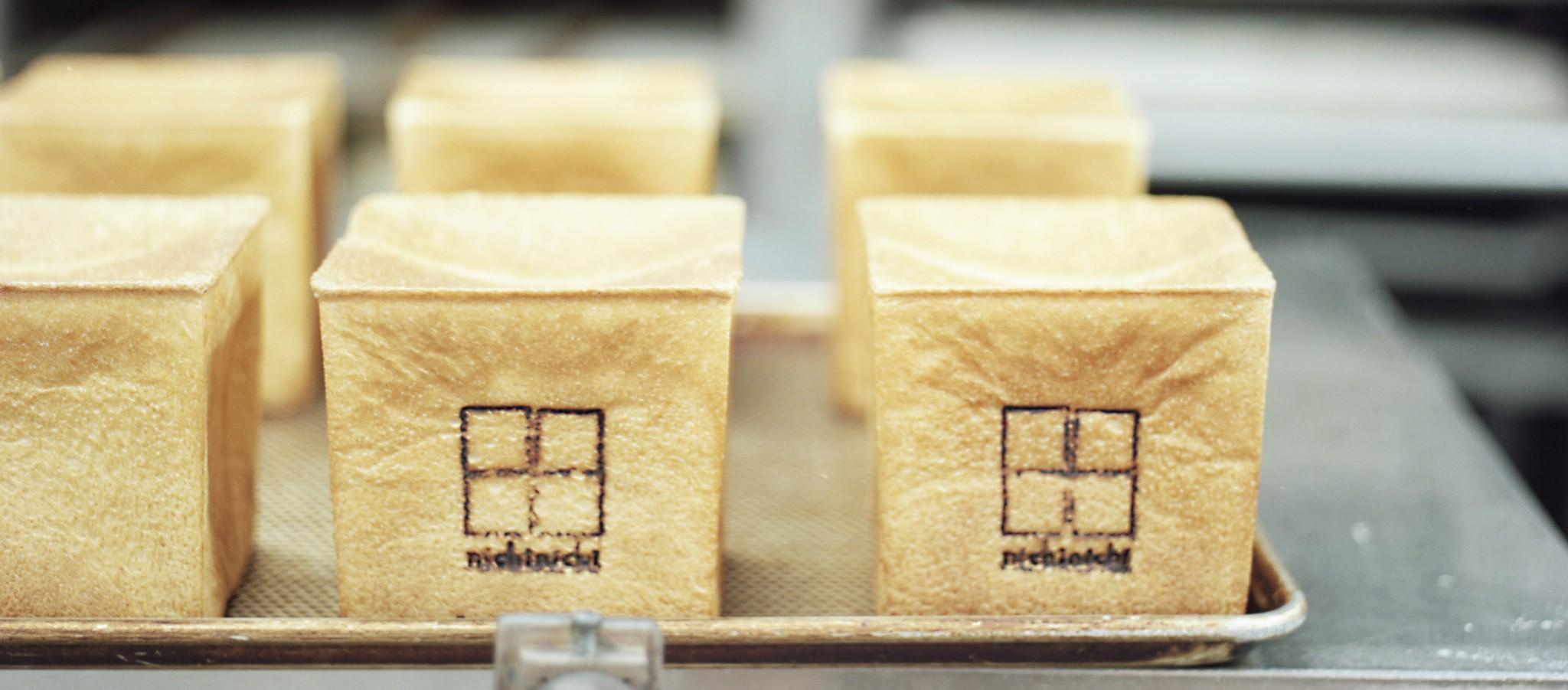
A bread shop that connects the town by Hanako1178. Let people be happy with the bread that saved you from rock bottom. To the bakery〈nichinichi〉that stays close to people.

Saved himself from rock bottom with bread and makes people happy. Ever since he was in elementary school, his dream was to be a comedian. At 18 he entered a training school. There he saw the reality of the world of comedy. Comedic seniors who are funnier than him—still without the spotlight at 40 or 50, working part-time. He had no confidence that he could live a life like that, nor could he imagine a brilliant future. At 24 he gave up on the path of being a comedian. A feeling of loss. Even when he sleeps, he can’t help thinking about jokes, but there’s nowhere left to make announcements.

Discuss this article ↗

2019 / 10

Grab a sandwich and take a bite right in the fields! Bibi City “Aspara Hitsuji” bread-baking hut / Café Stoυv

A view of Café Stouub. Hokkaido, Bibi (Biba(i)) City. In the middle of lush green fields, a bread-baking hut with a smokestack sits all alone. Sometimes sheep come to the fields and graze on the grass. What a peaceful, dreamlike scene. I wonder what’s inside that building. And before I know it, I’m pulled in. Café Stouub. Stouub means a kiln/baking oven. They stack up bricks and build it up…

Discuss this article ↗

Bread Lab (Panlabo) Vol. 5: bagels!

The director is Ikeda, and the researchers are all of you. After covering “the basics,” featuring meal breads, the final installment is bagels. When you think of bagels—thick and chewy. But inside that thick and chewy, there are various “thick-and-chewy-nesses.” Flexible thick-and-chewy bread that bounces while melting, airy mochi-mochi, mochi-mochi that unravels nicely… Once your sensitivity to mochi-mochi is heightened, when you eat a bagel…

Discuss this article ↗

Unexperienced mochi-mochi! Iwate “Mochihime Shokupan” made with new wheat / PanoPano

The season is harvest autumn. In July, a bit earlier, new wheat harvested in Iwate was finally released on September 28 after drying and milling. Iwate, once known for its Nambu wheat, has introduced varieties with completely new characteristics, becoming a presence that leads Japan’s bread scene. And the name is “Mochihime.” Mochihime Shokupan. While bread made with direct-eaten shokupan is a boom, the one making waves in Morioka is…

Discuss this article ↗

2019 / 09

After “bread-drinking” comes “at home.” A regulation-busting battle between a bread craftsman and a cook / Blanc à la Maison

Chef Naog(??) Wada of Omiya’s bread (left), and Chef Yohei Ootani of Toranomon’s cooking. By pairing up chefs and bread craftsmen, they pursue a bread-cooking-wine marriage—Blanc of Toranomon, which became a sensation with “bread-drinking.” This time in Omiya, the bread division led by Wada Shogo became independent and became a community-rooted bakery. Not for special occasions—just as part of daily life, with the family…

Discuss this article ↗

A bread shop that connects the town, by Hanako1176: Additive-free, naturally leavened bread made through self-cultivation that fits into everyday life in Shonan. We visit the bakery <Lumière du b> in Kamakura, Kanagawa Prefecture.

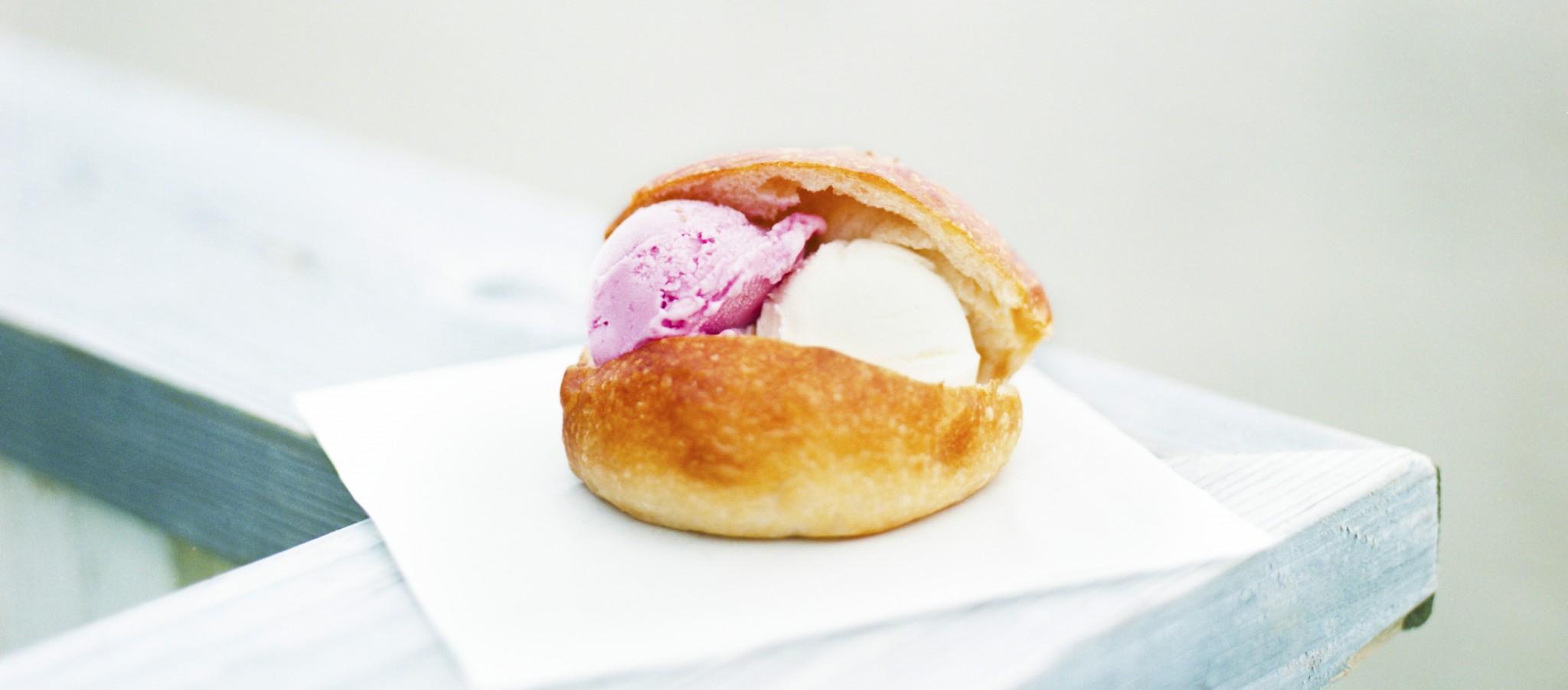
Everyday bread that blends into life in Shonan—hidden within it is an unceasing spirit of exploration. Looking from Yuigahama toward Inamuragasaki. In summer, a seaside town feels lively and cheerful. On streets lined with grand houses, you might see someone having a garage sale right in front of their home, or someone walking while carrying a surfboard. Everyone is enjoying their own summer. Buy the “Gelato Sand” (324 yen, tax included), then walk for 1 minute to Yuigahama. Under the sun pouring down, eating while being blown by sea breeze…

Discuss this article ↗

2019 / 07

More impact than you’d think: the rustic scent like summer’s cumulonimbus clouds / Paranoa

Rustique (Rustique) means a simple bread made with only wheat, salt, and bread yeast (yeast). You soak in lots of water to make a dough that’s really “toppun toppun” (thick and loose), and lift it upward with the power of steam. But Paranoa’s “rustique” goes even further, up and to the side. A bread that feels like you’ve already eaten it before you even take a bite. The minute you put in a knife, the scent of wheat rises up so intensely...

Discuss this article ↗

Bread Lab Lecture, Episode 3: Campagnu

(More than Episode 2 Baguette) The director is Ikeda, and everyone here is a researcher. At the bread research institute “Bread Lab,” the theme of Episode 3 is campagnu. Finally, we’ll be taking up bread made with “starter” (so-called natural yeast). The starter is microscopic microorganisms you can’t see. Because what kind of environment it’s grown in greatly affects it, each shop develops its own flavor. Once you can tell by comparative tasting, it’s amazing...

Discuss this article ↗

The specialty is sliced bread. That’s where the next “Bread Drinking” begins! / Cise

Sliced bread and wine: Ueno, a wine bistro in Ikeno-iri. Inside the kitchen (chūbō), you can catch a glimpse of a huge, real baking oven for serious bread-making that’s far too large for the small shop. The place advertises itself as “Bread&amp;amp;Wine.” Chef Ikuya Miyatake’s specialty is homemade bread. Of course you can enjoy the three-way pairing of wine, food, and bread, and when lunch time ends...

Discuss this article ↗

Homemade all the way to miso! “Daily Bread” where Japanese wheat meets carefully selected ingredients / Koku

Cream cheese and black pepper, and grain coffee—I met a shop that really hit the mark in the northern city. “Koku” in Morioka. The breads and sweets made with homemade starters and Japanese wheat manage to coexist in perfect balance: simple yet refined. It’s a cafe where you can eat in alongside gentle drinks for your body, and at the same time it’s also a natural foods shop that covers everything from additive-free seasonings to detergents. Those selections become the story of a new life...

Discuss this article ↗

2019 / 06

Taste tuna melt at a mass-market cafeteria in a wholesale market / Cooking Room Ikeda

Exterior view: I always thought markets were by the sea, but there’s one in Tamapura too. The Northern Market of Kawasaki City Central Wholesale Market. Sounds complicated, but roughly speaking, it’s like the Tsukiji of the past. People involved with the market and chefs are coming in and out briskly from the gate. Can a person who just wants to eat bread enter? Apparently, you can. It’s just got that...

Discuss this article ↗

The exquisite homemade sliced bread baked by a coffee roaster / Megane Coffee

Ham sandwiches and hot coffee (Kenya Kagaari). Only instrumental music plays softly, and you can’t even hear voices. A quiet, very quiet coffee shop. Yet everyone inside spends their time in quiet satisfaction. In the counter area, Shōgo Takeshi?(竹日渉) handles the customers at just the right distance—never interfering, and never leaving them entirely alone. Scene inside the shop...

Discuss this article ↗

2019 / 05

Hard-style bread and pure-Japanese breads coexist! A bakery that is kind to both bread fanatics and grandmas / Ichigashi Seisakusho

There are hard-style breads and pure-Japanese breads in an impossible coexistence. (From the top left, clockwise) raisin and walnut, yakisoba bread, endlessly lingering curry bread, spinach and bacon with homemade tomato sauce focaccia. Blackened browning right before it burns. A hard, thick crust. Is it real boulangerie? The moment I had that kind of prediction, it flipped just as easily—right next door is yakisoba bread. A town’s down-to-earth type…

Discuss this article ↗

A bakery that connects the town by Hanako1172. Bakes bread three days a week, and on other days goes to do farm work. What is Tochigi’s bakery café <Ippon-Sugi Farm (一本杉農園)> where the line never ends?

Grind the soil and knead the bread. A new form of bakery. Chef Fukuda (right) and Ikeda. The café in the foreground is the bakery in the back-left; go through the door from the front. There’s part of the farm beyond that. At the café opening time at 11:30, reservations arrive one after another. Bakes bread three days a week; on the other days, does farm work. A semi-farm, semi-bread bakery café <Ippon-Sugi Farm (一本杉農園)>. Renovated an old house, with pesticide-free vegetables that they grow themselves…

Discuss this article ↗

2019 / 04

Goodbye! Heisei!! Sandwich bread

A bakery in Shin-Yurigaoka called “nichinichi,” popular for its “nichinichi sandwich bread” with an unbelievably fluffy texture, sent me a short message from Chef Yoshiyuki Kawashima of “nichinichi.” “Mr./Ms. Ikeda, on the final day of Heisei, I decided that we’ll make something called ‘Goodbye! Heisei!! Sandwich Bread’! ・Harunoyoi ・Harukirari ・Kitanokaori ・Yumechikara ・Kitanohanami. These five varieties are Heisei…

Discuss this article ↗

A line in the middle of the countryside! Bread made from 100% local ingredients by a bakery that is also a farm / Ippon-Sugi Farm

Exterior. In the middle of a rural, pastoral landscape, business suddenly springs to life. The parking lot is full, and both the bread sales area and café are packed. But even so, it’s far from commercialism—just an old-fashioned, quaint, peaceful shop. What’s going on here, so far removed from town? Interior scene. On narrow display shelves thoughtfully filled with antique furniture and miscellaneous goods, there are hard-style breads, sweet breads, Danish pastries, curry breads, baked sweets…

Discuss this article ↗

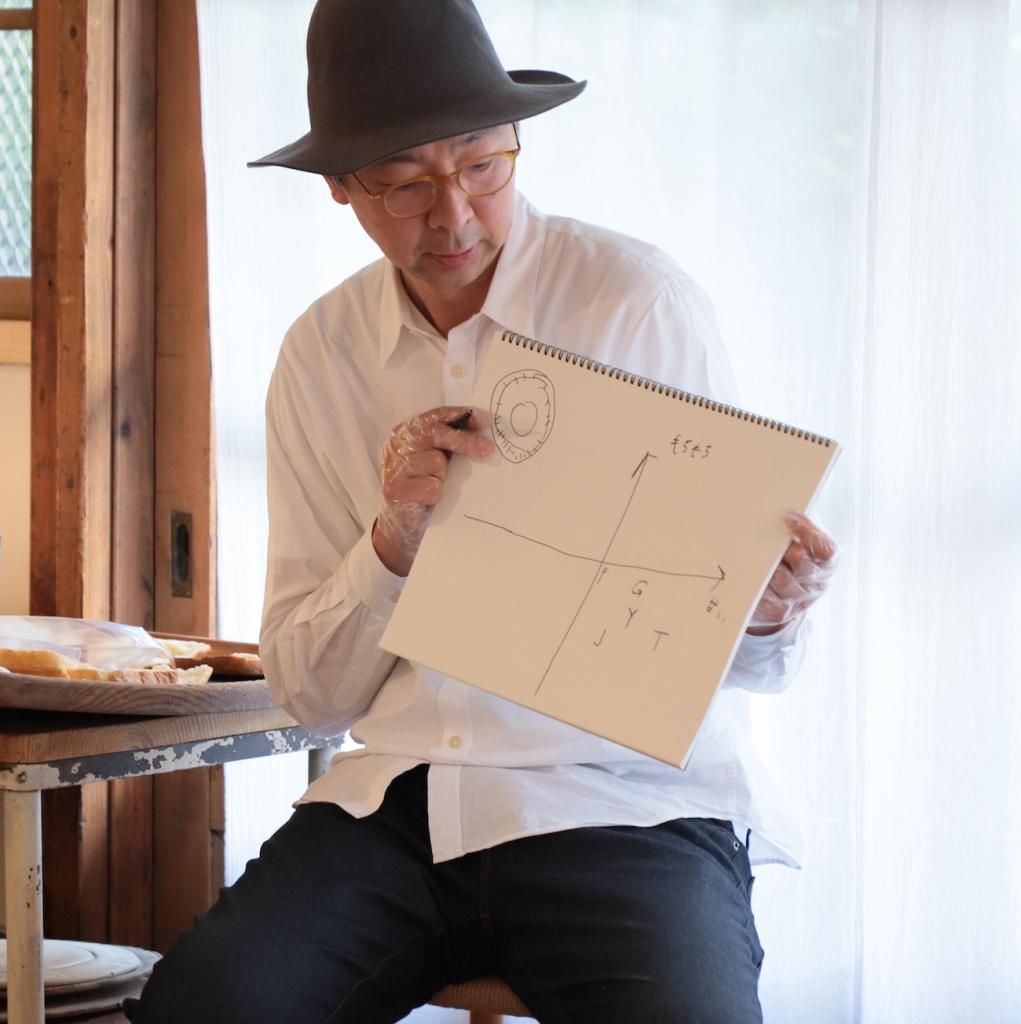
“Turn what you like into your work.” For that, we hold study sessions to hone the skills you need.

“Turn what you like into your work.” For that, we hold a study session called the “Pro Otaku Training Course” to hone the skills needed. I make my “favorite thing,” which is bread, into my job. Before I turned what I like into work, even while doing my job I carried what people call “a hard time living”—as if I weren’t really myself. Now I don’t even have time to think about such things; I’m immersed in the work right in front of me, and…

Discuss this article ↗

パンラボ · 朝日新聞「このパンがすごい!」