Blog

2010 · 450 articles / Newest firstClear filters

2010 / 10

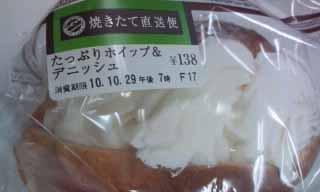
A second assault on a bakery

At Kashiwa, I watched Carlos Cuarón’s short film “Bakery Re-assault.” Carlos Cuarón is a Mexican writer who makes films with his older brother, so I thought of him like the Mexican Coen brothers. But it seemed like the older brother was the more active one, and the younger brother was just kind of attached to him. However, lately it doesn’t seem like that, and the younger brother also seems to be active. As for me, I—wrote the script—

Discuss this article ↗

Breads you want to eat at Another Harajuku

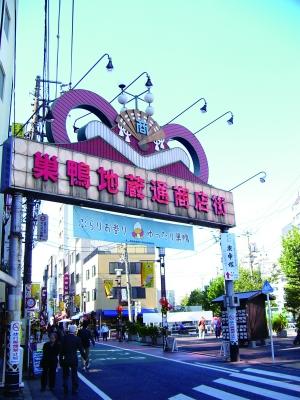
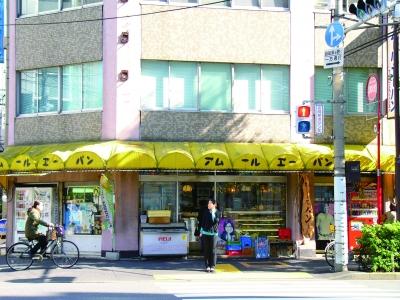
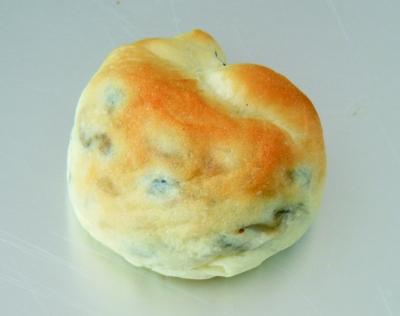
“…Sugamo!!” It feels rude to say “Old Ladies’ Harajuku,” but that afternoon in the Jizō-dōri shopping street, I encountered an astonishing number of women (and they looked very lively). Blue, green, red, and yellow—everything was beautiful. The long-established shop with more than 90 years in business, Kifukudō. At the 11th Pan Labo—Pan-o-furu-i—these English raisin breads were featured on the cover of Pan Labo. Anpan and cream buns—

Discuss this article ↗

PASCO milk bread

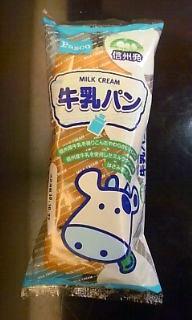
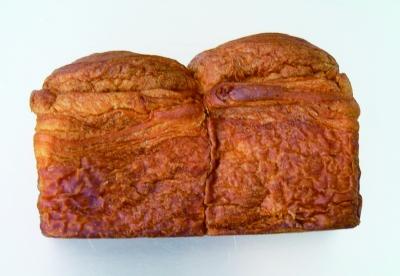
It was new release or something, though I don’t know exactly what, but it’s PASCO’s milk bread that I hadn’t seen in supermarkets until now. The tagline quietly written on the package—“from Shinshū”—made my local bread-loving antenna respond sharply. It turns out that milk bread is a bread that’s widely eaten in Nagano Prefecture and is placed in various bakeries and supermarkets—something of a local staple bread. Among them, the most famous—Matsumoto—

Discuss this article ↗

Breads you eat when you want to be comforted

There are times when you want to be gently cared for… There are times you want to chomp on a baguette sandwich with only ham and cheese, or times you want to munch on an egg sandwich made with soft, pliable bread. And depending on your mood that day, what bread you want to eat changes. Today, I went to Amour Yépan in Jimbocho. I found bench space right next to the shop where you could picnic, so I took a photo. The wind was—

Discuss this article ↗

Miso bread (Bread 10 from the Local Bread Festival)

I live in the suburbs of Tokyo, but even when I think of local breads in Tokyo, it doesn’t immediately come to mind. Curry pan, anpan, cream pan—everything was created in Tokyo, so in a sense you could say it’s local bread, but once it becomes famous in Tokyo, that immediately means it becomes available nationwide, so it’s hard to look for local breads in Tokyo. And then I found that there are local breads in Tokyo too. Kame—

Discuss this article ↗

The ultimate “imo-kuri-kabocha” feminine-bias bread

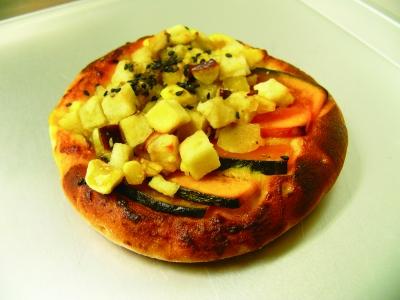
Sweet potato, chestnut, and pumpkin bread by Rubian Marron Glacé, and sesame bread by Troisgros. Kimijima-san brought them for me. I’d seen you tweeting something like “I eat bread using sweet potato, chestnut, and pumpkin every day,” so I asked, “Please let me eat that girl-like bread that will make me your captive.” The next day, she rushed over and bought them right away—so I’m really grateful for that.

Discuss this article ↗

It’s not pancakes that refused to be eaten.

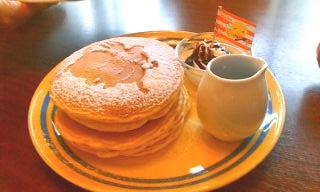
At Kashiwa, maybe a few pancake articles served as a lure, because I too encountered pancakes. But I wasn’t especially targeting them—by coincidence, what was there looked like bread, and only pancakes were there. However, considering the flow of the moment, I thought this was the current bandwagon to get on, and I ordered immediately. a Piece of Cake, which is next to the Taro Okamoto Memorial Museum in Aoyama—

Discuss this article ↗

HisuI bread (Bread 9 from the Local Bread Festival)

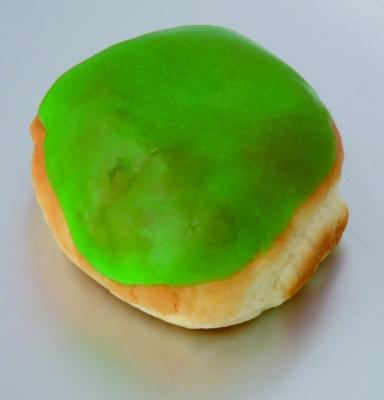
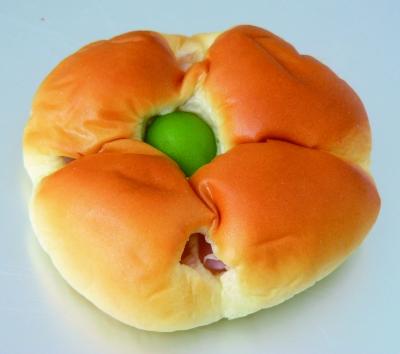
When I learned the results of the Local Bread Festival—first was yōkan-pān and I knew it was third place—and “Hisui bread, what’s going on?” was the first thing I thought. Using the same concept but not red bean paste; it’s yōkan. And apparently, back then, they also called it “yōkan bread.” Even the unusual green color is part of what makes it like a local bread that competes on uniqueness. The butter scent that gets scattered around makes it feel like an old-fashioned, quintessential bag bread, the kind you can practically imagine from long ago—

Discuss this article ↗

Fukushima yume anpan (Local Bread Festival bread No. 8)

They say that the world of bread has a west-high and east-low pattern. In the Local Bread Festival, while many formidable players were gathered in the western part of Japan, as you went farther east, the number of breads worth seeing steadily decreased. Among them, the one that stood out was Fukushima yume anpan. In voting, it also put up a strong fight, finishing 6th, with only a small gap from 3rd (yokanpan) (though perhaps the votes stopped increasing partway due to it selling out). The peach aroma is so good—

Discuss this article ↗

Homeward bread and bread starter and Princess Tamago

The is I got on the Shinkansen to go back from Kashiwa, and the bread I buy with a high probability is from Shizuya, located at the Hachijo Exit of the station. I buy the bread there, then eat it on the Shinkansen while heading home. That’s the routine. Carne. Bread dough from France (French bread) with butter, ham, and onions. That’s all, but it has an irresistible flavor. The photo is of a cheese carne with cheese added. As for me, I like this carne and beef cutlet sausages…

Discuss this article ↗

A feature on Nobuhiro Yamaguchi in “IDEA”...!!

We’re letting you know that Nobuhiro Yamaguchi, who designs for Pan Lab, is featured in the front matter of the design magazine “IDEA” for 42 pages. In addition to having the works he has worked on up to now introduced with color photos, his thoughts on typography are also written up in an interview format. Each page has a different paper thickness and texture, and as you rapidly flip through—

Discuss this article ↗

Harris-san’s milk anpan (Local Bread Festival bread No. 7)

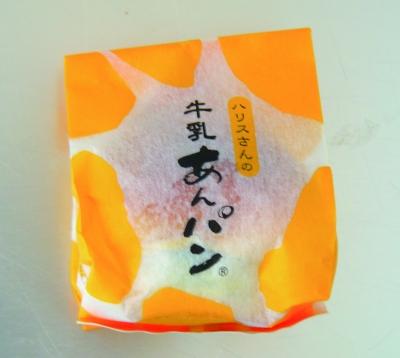
A mushroom-shaped bread that comes out from a bag with orange polka dots. The smooth, even refined texture is truly excellent—classy. The dough is fluffy, and the sweetness of milk and butter seeps through wonderfully. When you eat anpan, a phenomenon happens where—somehow, though you don’t know why—you want to drink milk, and many people complain about that just as you’d expect. So there’s no way the dough mixed with milk and the bean paste wouldn’t match. It melts in your mouth so—

Discuss this article ↗

Tamban black bean bread (Local Bread Festival bread No. 6)

I had been one-sidedly assuming that you can’t expect much from bakeries inside supermarkets, and so on, but in Hyogo Prefecture, in-store bakeries are also at a high level. After I ate Coop Kobe’s Tamban black bean bread, I couldn’t help but think that. The dough is chewy, and like bread flour’s sweetness that’s similar to white bread, it spreads gradually as it melts. There’s no sweetness from sugar. That slight lack—

Discuss this article ↗

Royal Host’s all-you-can-eat pancakes

If the name “pan” is there, and then you add those four characters—“all you can eat”—no matter what happens, there’s nothing else to do but immediately dive in. It’s the strongest possible situation. In other words, it’s like a Royal Straight Flush—though in this case, you might want to call it a Royal Host Straight Flush. Up until October 29, Royal Host has a promotion called “All-you-can-eat pancakes.”

Discuss this article ↗

Kobe beef curry bread (Local Bread Festival bread No. 5)

Hyogo Prefecture, home to Kobe—said to have the highest consumption of bread in Japan. In the Local Bread Festival as well, it boasted a substantial number of entries, and it was only at the Hyogo Prefecture booth that four companies each brought their local breads and gathered together in a “misery makes strange bedfellows” kind of scene. The Kobe wine bread from Danmarche, whose head office is in Akashi. They say that Akashi also has something called “takopan.” You could almost call it a local-bread city.

Discuss this article ↗

Bread that captivates female high school students in Tokyo

Miso pan. This is a bread from Anjerica in Shimokitazawa. I heard from Mr. Kashiwa that the female high school students who passed in front of the shop were saying things like, “This miso pan is super delicious, ne!!” Just imagining Mr. Kashiwa crouching a little to eavesdrop on it is already funny, but anyway—couldn’t this be the sort of remark you can’t afford to let slip!! This isn’t just something said by ordinary female high school students—

Discuss this article ↗

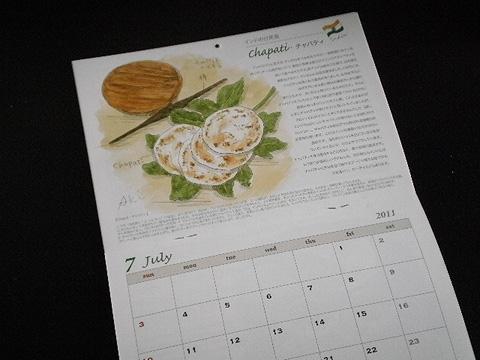
Pan Calendar 2011

After the summer that was too hot and lasted too long ended, at last the season for appetite came. This past summer, I had been taking shelter at the foot of Mt. Yatsugatake in my hometown, but as for the bread, I ate it “properly” every day. Yes, I was eating the coppe bread for school lunch that they bake at my parents’ house—every day… . The freshly baked coppe bread tastes good, but if you have it day after day, and for more than a month, you inevitably get tired of it. Still, at 5 p.m., when the bread factory was finished—

Discuss this article ↗

Kobe beef curry pan (Local Bread Festival bread No. 4)

Isuzu Bakery is apparently a well-known long-established shop in Kobe (and A-chan also commented the other day). Especially, it seems their bread is famous—though I haven’t eaten it myself, I’m sure it’s so good that in Kansai dialect, you’d say it’s “super.” And I think that after I ate some shops’ sandwich breads at the Hyogo Prefecture Lab released this month on the 17th and was absolutely awed by how great it was. Kobe beef curry—

Discuss this article ↗

Miscellaneous things related to Asanoya’s cheese

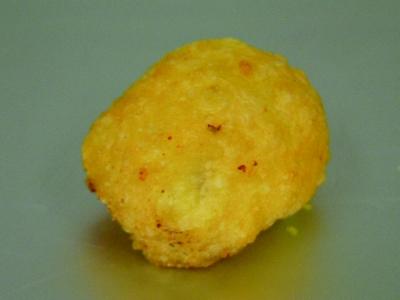
Tomato & mozzarella cheese. A bread where dough wrapped around petit tomatoes and cheese is deep-fried in oil. Mozzarella cheese—relatively familiar to people—has a friendly flavor. Mr. Kashiwa delivered Asanoya’s bread. Even though you might say I’m an editor, I’m not in a position to be able to go flying around outside every day and sample all kinds of breads—my life is such that I can only manage to sneak out briefly between things. So—

Discuss this article ↗

Meeting* bread (Local Bread Festival bread No. 3)

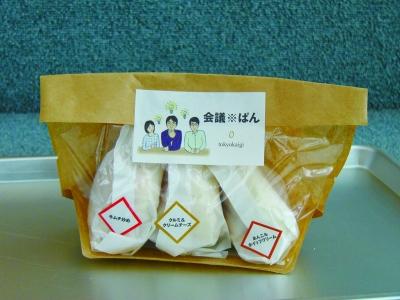
“Kaigi pan” (please see D-sang’s article from the other day for reference) was born from TV program “Tokyo Kaigi” by TV writer Kaodo Koyama (BS Fuji). It’s not a bread made by a bread craftsman; it’s bread made by a planning/design company. Because of that, I thought that rather than the bread itself, it was bread assembled by building it from around the outside—by the time you get to naming it, packaging it, giving it its shape—everything. It’s a size where you can finish eating it in two or three bites. It’s—

Discuss this article ↗

A dango bread out of nowhere (Local Bread Festival bread No. 2)

Continuing from before, it’s a product from Takaoka Seipan in Kumamoto. How many attractive options does Takaoka Seipan really have—Negi pan, milk bread, and then a dango bread out of nowhere! For the local newspaper to report that the Local Bread Festival silver medal went to them, and for the president to comment that “the color would have been better if it were gold,” you can’t help but wonder whether they’ll be sending new breads again next year as well—their future direction is impossible to take your eyes off. Negi pan—

Discuss this article ↗

パンラボ · 朝日新聞「このパンがすごい!」