Blog

People & place · 944 articles / Newest firstClear filters

2011 / 01

To set off on my adventure around 200 Tokyo shops

As for “Around the World in 80 Days” or “Midnight Express,” anything is fine—what always goes with books of travel and adventure is whether you can make it to the finish safely, or whether you live or die, and that thrilling, hair-raising feeling; and I’d been thinking that I want to put myself in a place like that, and yet I’d been lounging around at home for years. Actually, already for about the past two days, right in front of blog readers, depending on how you look at it…

Discuss this article ↗

The beans of gum bread and Dunkin’ Donuts

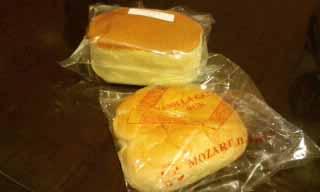
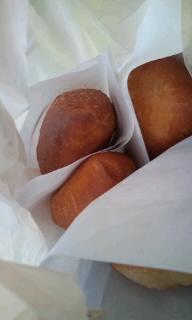
Bread from MOZART BAKERY in Kashiwa. The vanilla cream bread in front. The honey castella bread in the back. This is a sweet bun in Guam, like ABC Mart’s sweets that are everywhere like bamboo shoots after rain. The simplicity of the package is refreshing, and it feels like freshly wholesaled goods from a local bakery. Take a bite. As expected, bread is moist and has weight. Something sticky that seems like it would cling to the back of your teeth (though it doesn’t actually stick) and…

Discuss this article ↗

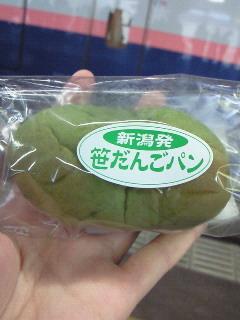
Not a sane thing to do—so good it makes you cry!! New Niigata “sasa dango” bread

The New Year’s mood has completely worn off, and it’s “days when you eat urban bread in the world’s largest megacity TOKYO” (lie). As I wrote in my diary the other day, I was in Niigata for the year-end and New Year holidays, but on the way back, inside the ticket gates at a shop at Niigata Station, I discovered something called “sasa dango bread,” and I couldn’t help but let out a voice. With how faint its presence was…!! In the tone of speech I’d gotten used to at the register, I said, “The sasa dango are put in as-is, so please hurry—”

Discuss this article ↗

2010 / 12

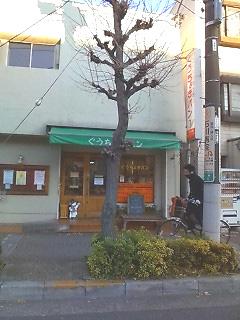
The truly real “Guu-cho-ki” bread

Where is the Guu-cho-ki bread shop that appears in Kiki’s Delivery Service (Majo no Takkyuubin)? There seem to be theories such as one that it’s in Tasmania, Australia, but I’ll announce the “standard” one. It’s in Minami-Urawa on the Keihin-Tohoku Line. It’s so close to the nursery school my son attends that I myself, having discovered it, am flustered. I can’t believe what I saw, so I rubbed my eyes and checked the sign again and again, but it really was “Guu-cho-ki bread”…

Discuss this article ↗

Taro-ya

There is a bakery that only opens once a week. It’s called Taro-ya, and it’s near Komaba Stadium, the home ground of Urawa Reds. Even though it’s in a residential area, it’s a place where you can see fields scattered about, and you end up getting lost for a while trying to reach it by bicycle along a winding road that makes you recall that it used to be a narrow path between rice paddies/fields. The person who arrived at the shop around the same time said right off the bat, “It’s hard to find, isn’t it—,” so surely it…

Discuss this article ↗

Seikyo-do

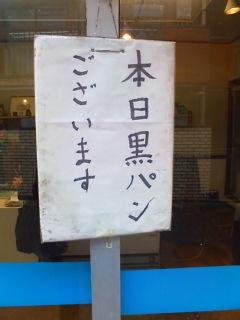
If someone suddenly told you, “We have black bread today,” you’d feel like you’d lost out by walking right past without buying. After all, because there are posters, in the Sangenjaya area, there are bound to be some black-bread devotees who live in a constant state of being up and down—thinking “There was black bread today” or “There wasn’t today”—and squirming every day. Black bread is so enthralling to people that…

Discuss this article ↗

Guu-cho-ki bread shop

The moment you walk into the shop and just glance at the products, you can tell the “spine.” I like a bakery like that with such a lineup. If you have every kind of bread prepared, I suppose it’s probably for the customers’ sake—but then you end up aimlessly getting lost, not knowing what to buy. When there are too many products, the “spine” gets weighed down by extra fat and you can’t see it. What I call the spine is…

Discuss this article ↗

“I Want to Go to Siberia, Too,” as it were

I had the feeling that Siberia was too far away. That kind of feeling. It was one of those breads I wanted to try someday, yet for some reason my hands never reached it. Then, thanks to Kashiwa-de’s whims, that Siberia suddenly appeared right in front of me. He brought me Tsukiji Kimuraya’s Siberia (Siberia from Tsukiji Kimuraya). (↑ I took care of it at the 2nd Pan Lab.) When I opened the seal, it was indeed fluffy, just as I’d heard in stories…

Discuss this article ↗

Kifukudō (Toshima ward local-bread journey 4)

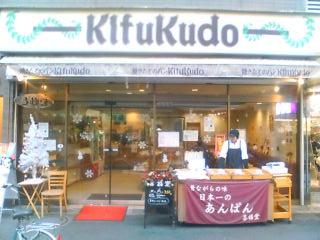
Kifukudō is at the gate of Zōnunuki Jizō in Sugamo, and its anpan is famous. D-something was talking about, while teary-eyed, how beautiful the luster of the light brown bean paste was. As for the breads at Kifukudō—this is the impression for every one of them—they’re gooey. Not gooey after the bread melts in your mouth. It’s gooey already the moment you put it in your mouth. For the solid thing called bread, is this kind of adjective appropriate?

Discuss this article ↗

Mifune (Toshima ward local-bread journey 3)

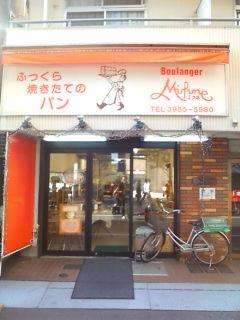
It’s far more likely than a dog walking along a stick. If you walk around Toshima ward, you’ll run into local breads. No, not only Toshima ward—wherever you walk and however you walk, maybe without realizing it, this world is actually overflowing with local breads. After all, I had local bread in my hands in less than 30 seconds after coming up from the Ikebukuro (Higashi-Ikebukuro) Station. Just before Mifune, I had passed by it many times before…

Discuss this article ↗

tsuji-gui

Near Kashiwade House (Higashi-Nakano), a shop whose meaning I couldn’t quite make out had suddenly opened. There are some notations outside on a blackboard that look like lunch menu items, but I can’t quite tell what they are. That’s because they aren’t anything like English, French, or Italian. So I have no idea what kind of shop it is at all. But on the lower part of that blackboard, in small letters, it says, “Piroshki—takeout.” It must be like a café. The shop…

Discuss this article ↗

Coffee-do-raya’s croissants

I’m weak against the word “for business use,” and I snap on to it right away. I like Kappabashi, and I like D&Department, too. And the coffee-do-raya I discovered near my home (10 stores across the Kanto region) had a pretty strong “business-use” taste to it, and it was interesting. They had all sorts of things around the café scene—dozens of kinds of drippers, dozens of kinds of coffee pots, and dozens of kinds of coffee mills—on the shelves.

Discuss this article ↗

Double tall bine mi

Breadfield rugby ball! Glove! And a pillow! That’s amazing. The symbols/codename-lingo for bread. Rugby ball: A manga artist from Osaka called a bread shaped like a rugby ball—like a melon pan or like a Sunrise—by that name. Grove: A person who was an editor from Kagoshima called a cream puff “a glove.” And then, the pillow on the comment that was next below, in the thread about Russian bread! About food symbols/codenames—

Discuss this article ↗

Yamazaki’s Russian pan sandwich

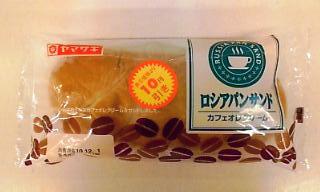
At the supermarket, I found something called a Russian pan sandwich, and my local bread antenna reacted instantly. And if it’s “Russian,” maybe it’s not just at the prefecture level, but even at the possibility of a “worldwide local bread” category, right? I thought that, but then I also thought, “Wait a second.” What makes something a local bread representative of its own region—those wings of inspiration and imagination flap and you name it…

Discuss this article ↗

Bread Studio Kazamidori

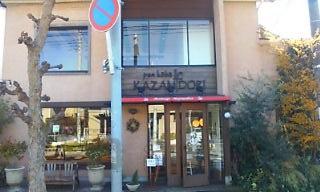
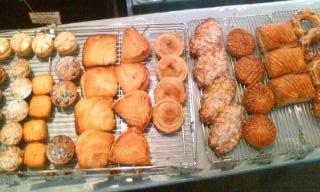
There are two directions for a great bakery: one is the kind you feel like you want to go all the way out to, and the other is the kind you’d be happy to have nearby at home. Bread Studio Kazamidori in Higashi-Urawa is unquestionably the latter, and since it also has a number of “trick” items, it doesn’t matter at all if it’s the former. Trick item No. 1, trick item No. 2—the king’s cream puff and Hercules—and No. 3 is…

Discuss this article ↗

2010 / 11

Chez Luy

Chez Luy, which has the masterpieces “Daikanyama curry pan” and “Daikanyama anpan,” is also a cake shop. When it comes to sweets in Daikanyama, it feels like it might be a bit high-brow, but it’s very easy to go in because they put curry pan right near the entrance, and you can also end up feeling full. The fact that the sweets section and the bread section are almost a 50-50 split is a surprisingly rare pattern. That might be why there are lots of breads with a pastry-chef-style way of thinking. For example…

Discuss this article ↗

How do Kyoto korokke panstacks taste—do you eat them, kind of gooey?

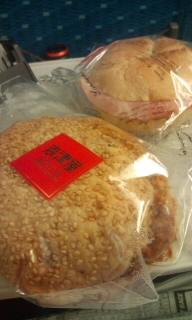
At Kashiwade, I bought SIZUYA’s bread again today. If I arrive at the station with 20 minutes left until the Shinkansen launches, then for me there’s only Shizuya. In front is a korokke pan I’ve never had before—an old-fashioned nostalgia kind. In the back is the pepper carne I get regularly. What exactly is “nostalgia” as defined by people from Kyoto? I bought this korokke pan with that feeling, but instead of “nostalgic,” it was a korokke pan that fit my mouth perfectly.

Discuss this article ↗

Le Ruisseau

Tucked away from the hustle and bustle of Shibuya, but only two stations away, in a quiet residential neighborhood—Le Ruisseau is there. As I mentioned earlier, Chef Shimizu is someone who trained at Maison Kaiser in Paris and then helped set up Maison Kaiser in Japan. I don’t think there’s any doubt that this shop is a little Paris in Tokyo. But it’s not like it’s just run at a level that a new and up-and-coming chef operates—

Discuss this article ↗

Takase (The Journey to Local Breads in Toshima Ward 2)

It was somewhat similar in meaning to Chieko’s remark that, “Tokyo has no sky,” but I had written previously (in the Kameido miso bread article) that “there are no local breads in Tokyo.” I need to quickly retract how shallow that understanding was. Even on top of Sunshine 60, there is a blue sky—and with so many streets and alleys packed into this vast Tokyo, it’s only natural that there are breads known only along the paths they travel, and they—

Discuss this article ↗

The Road to Completion for Local Breads in Toshima Ward

In a recent article, I impulsively and carelessly wrote about having this grand ambition to make local breads in Toshima Ward and compete in the 2nd Local Bread Festival. About a month has passed since then, but I wasn’t just sitting around—I was lying around at home, thinking and continuing to ponder whenever inspiration struck. And now, I’m somewhat regretting what I said. “I wrote that I would make local breads in Toshima Ward,”

Discuss this article ↗

パンラボ · 朝日新聞「このパンがすごい!」