Blog

Bakers & craft · 943 articles / Newest firstClear filters

2011 / 07

Risdor Mits (西荻窪)

No. 82 (An adventure visiting 200 shops in Tokyo) I’ve seen the owner, Mitsuo Hirose, on TV, getting angry at a craftsman who was in training. He was an extraordinary passionate person. He promotes “additive-free bread,” and keeps speaking up about the harms of chemical additives and trans fatty acids. What is it that Hirose is most earnestly teaching to all those apprentice disciples? His wife, Chihō Hirose, who is also a bread baker, says:

Discuss this article ↗

Julien Bakery (亀戸)

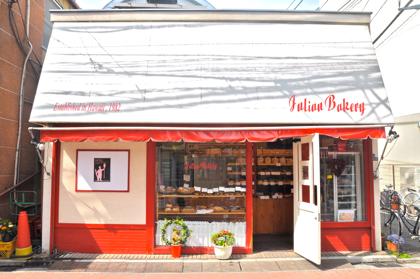
No. 80 (An adventure visiting 200 shops in Tokyo) The Chūō-dōri Avenue that continues from the station in Kameido is a lively shopping street filled with greengrocers and shops for everyday necessities run by the wives—very closely tied to daily life. Only one place stands out as buttery-smelling: a bakery with red walls. Above the awning, in red letters, it says, “Established in Hawaii, 1982” (founded in 1982 in Hawaii). In the narrow interior, there isn’t even enough space for customers to pass each other.

Discuss this article ↗

Results of the Bread Taster/Shop Concierge Certification Exam

The results of the Bread Shop Concierge certification exam I took in May were delivered. Whether Kashi wade-san knew or didn’t know that, he handed me bread in silence. “D…Which bakery’s bread is it?” D “No, it’s just… over there… (mumbling, and then glancing at me)…” D “Huh…… (th-th-they’re testing me—!!!!!)” In a quiz format, Kashi wade-san asked which shop the bread was from…

Discuss this article ↗

Pui Sunce (藤が丘)

No. 77 (An adventure visiting 200 shops in Tokyo) A well-known shop for French pastries—why would it end up appearing in an adventure that’s supposed to be about visiting bread shops? Among the breads lined up by the window, I spotted “Pain au Levain” (1/2, 600 yen). Even though it’s heavy, hard, and not really easy to eat, this bread is baked by a bakery where—even though it’s not the majority—even there too—there are people who take it seriously. Not as a side job…

Discuss this article ↗

Breddalà One (千歳烏山)

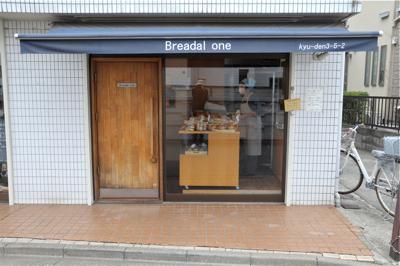
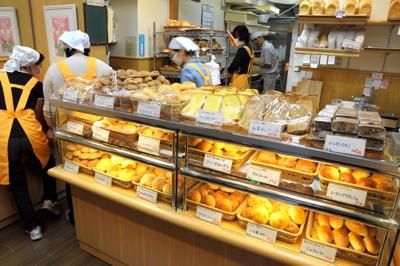
No. 76 When a runner at first base—who’s moved away from First Base—watches the pitcher’s situation while trying to steal a base, that person’s body always moves from side to side in tiny, high-tempo motions without ever resting. After finishing shaping one bread on the cutting board, they fly to the oven in front of the kiln like lightning, three steps ahead, and place the bread on the tray. The moment it’s set down, it’s like they immediately—

Discuss this article ↗

2011 / 06

Milk roll (Shin-Nakano)

No. 72 (An Adventure Around 200 Bakeries in Tokyo) People say the direction for bakeries has already been exhausted. We have VIRON, we have Bäckerei Brot Heim, and the bread cultures of countries other than France—already, too, are being baked by excellent craftsmen. Even so, we are waiting for a new bakery. That’s why we go around bakeries. Sometimes, after the bakery has been open for 15 years…

Discuss this article ↗

Café Tohō (Sasazuka)

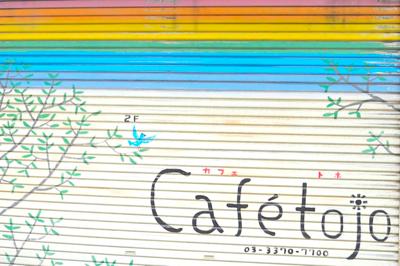
No. 70 (An Adventure Around 200 Bakeries in Tokyo) I didn’t realize it was a shop that sells bread, so at first I almost went right by. Above a shutter painted with little birds and rainbows, there’s an aerial cafe connected to the ground by a spiral staircase. I thought it was exactly like a bird’s nest. When I went to buy bread, the owner, Yoshikazu Tojō, explained it to me. “I decided to raise the yeast with love, in gojūon order…”

Discuss this article ↗

Bread Lesson Note: Flour Flower Bread Class

When you see the dough in the bowl, or when you see the molded, perfectly round dough as-is, “It’s cute,” Mayumi Fujioka says. Even though she’s in a position to teach bread class participants, with every time she looks at dough, her feelings of wanting to think of bread as lovable just well up without her even intending to. Fujioka-san also says, “When you look at the expression of each and every bread roll.” When you look at expressions, you can’t help but not just stare at it vaguely like it’s merely bread and…

Discuss this article ↗

Boulangerie Le Bois (Nakano Fujimi-chō)

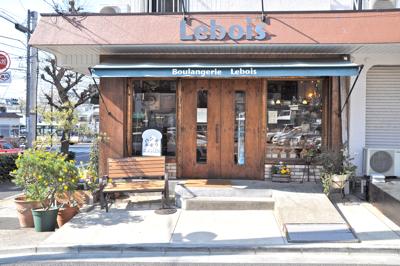
No. 68 (An Adventure Around 200 Bakeries in Tokyo) I ate the croissant (180 yen) and started choking. Something like that has never happened until now. It’s the same thing as when you eat kinako mochi, but the skin of this croissant breaks down into powder-like tiny particles—so they get lost in your windpipe and lodge in your throat. The brittle skin you can’t cut through. What Chef Mori is particular about is “kushi”—brittle even beyond that, “crisp, even more than crisp”…

Discuss this article ↗

Dandyzon Chef Kimura’s Favorite Bread

I’m very curious what kind of bread professional bakers usually think is delicious. Does a favorite bread reflect that person’s sensibility toward bread and their personality? Here’s what Kimura Chef of Dandyzon told me about his favorite bread. “On holidays I go to bakeries, but I’m not doing anything special—I think it’s no different from ordinary people. There’s a meat pie from La Terre-san nearby…”

Discuss this article ↗

Bakery Kuma (Aobadai)

That was the 66th shop (the adventure of visiting 200 places in Tokyo). There was a rustic bread with walnuts (150 yen)—so moving it felt like I couldn’t bear to finish eating it. It’s like I’ve been staring continuously at the traces, two flavor trajectories—walnut and wheat—drawing such beautiful lines. Those two flavors are in perfect balance, creating a marriage that’s faint and delicate, but because of that you can’t take your eyes off it. With big-grained…

Discuss this article ↗

2011 / 05

Tournage (Sasazuka)

That was the 63rd shop (the adventure of visiting 200 places in Tokyo). When I went to Tournage’s Jingumae branch in the past, the products were already sold out, and I couldn’t really see much bread inside the shop, but I did catch glimpses of women gathered around the worktables, working with a feverish energy. At the center was the owner-chef, Riko Koyama. In this shop, they run a class teaching bread made with natural yeast. Why are the breads created from Ms. Koyama’s hands…

Discuss this article ↗

BOULANGERIE ianak! (Nishi-Nippori)

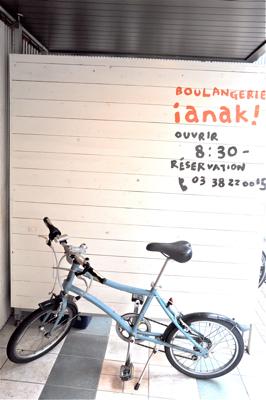
That was the 60th shop (the adventure of visiting 200 places in Tokyo). Pop. While dressing it up, but lowering the barriers, the owner-chef chose to be pop as a way to connect with local people. In terms of color, it’s orange. The store name isn’t written in a printed cursive typeface; it’s handwritten. The speed and lightness of bicycles racing through town fit this shop’s image. What is “pop” in bread? Between rules and theory gaps…

Discuss this article ↗

Toraya Bakery (Kanamachi)

That was the 59th shop (the adventure of visiting 200 places in Tokyo). The store manager, Mr. Susumu Morioka, who says his hobby is photography, saw the Nikon I was using to take photos of the shop and said that he uses a Canon. When I asked why he uses Canon instead of Nikon, he said, “Nikon is too clear. I don’t really like that kind of clarity. You can probably tell from the taste of bread, too.” Indeed, that taste seeps in and drifts. It’s…

Discuss this article ↗

Fluffy (Shibuya)

That was the 58th shop. With Fluffy, there’s no such thing as “the usual.” There isn’t “the usual baguette,” or “the usual cream bread,” or anything like that. They have anpan and also sandwich bread, but this shop gives them its own richness and distinct character. Bread should be free. It isn’t about a competition to see how orthodox you can make orthodox bread, in terms of how finished it is. It’s far from that. It’s about people’s aesthetic sense, their own…」「パンの漫画9『先祖とフォカッチャ』」already translated above? (Not applicable) -> (keep as is) This entry already covered. (No additional text) -> ignore. Sorry no extra. Continue…

Discuss this article ↗

Boulangerie Auvergne (Keisei Makaitai-shi)

No. 57 (An adventure visiting 200 bakeries in Tokyo) On the east side of Tokyo, this is a rare, authentic boulangerie. It appears after you start at Keisei Makaitai-shi Station, follow the shopping arcade, and then trace the beautiful row of cherry trees. The technical skill is amazing, and numerous contest-winning creations decorate the display area. Higher. Faster. Stronger. It sounds like an Olympic slogan, but in the case of Auvergne, it’s… more tender

Discuss this article ↗

Funka (Asakusa)

No. 56. From the window you can see on-street gardening in the tenement alley. Taito City, behind Senso-ji Temple. Townspeople of the old neighborhood visit a natural-yeast bakery run by young sisters. At first, she’s a freelance writer. Next comes the mother bringing along her clingy young boy. Then a gardener in nikka-pokka trousers shows up, with a deep voice: “One round bun, please!” It makes you think it could be something used in a movie or manga setting.

Discuss this article ↗

Mixture (Shimokita-zawa)

No. 54. There’s a koppe bread at the café. On a concrete floor with everything exposed, there’s a black sofa, and beside it are yakisoba bread, croquette bread, and anpan. It’s the kind of place that’s strange—yet also exactly Shimokita-zawa. The mix of new and old gives softness to a sharp-edged space, drawing adult customers to a shop with a young customer base. Where mixture is now located, there’s also a place called Daieido—

Discuss this article ↗

パンラボ · 朝日新聞「このパンがすごい!」