Blog

Bakers & craft · 943 articles / Newest firstClear filters

2011 / 12

A Great Cinnamon Tie-Up

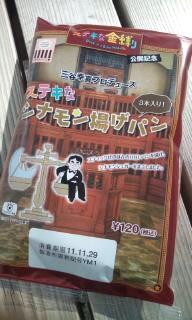
Bought at FamilyMart: a fantastic cinnamon fried bread roll (kashiwade cinnamon-agerupan). I think it’s a topic that really shouldn’t be overlooked. I think that, for sure. A firm, absolute! There’s no need to say the reason—it’s obvious. You’ll understand if you read this blog. Me—I like the works of Yukiyoshi Mitani, and I watch them a lot. Plays too, and movies too. (I like plays. As for movies... Hmm—who knows ← Mr.).

Discuss this article ↗

Interpret it as a “good” e.g., Francois-style Umaibo, and that’s fine

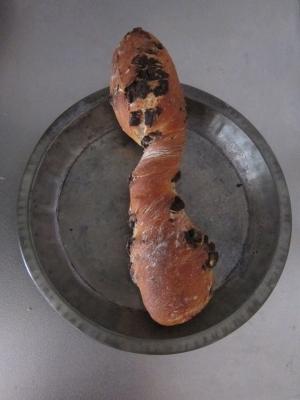
The stick I found at Boulangerie Jean-François. The black part is chocolate. Even if it spills, it’s completely fine—inside, it’s packed with stuff. It’s different from the original that you can eat immediately on the spot, both in firmness and size, but it’s a sweet, delicious stick you can enjoy for a long time after cutting it into 2 cm widths. The new release had incredible presence on the sales floor. [D] (2012/1/25)

Discuss this article ↗

2011 / 11

The 5th Challenge Cup Final Competition Documentary

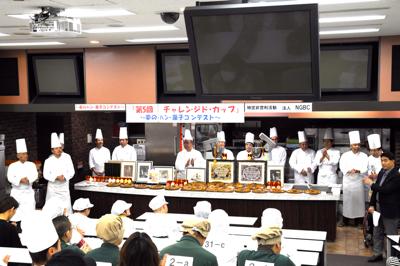
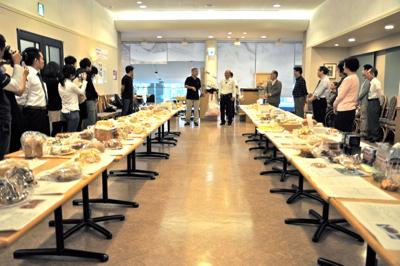
On Saturday, November 26, the 5th Challenge Cup final competition was held. The Challenge Cup is a competition held once every two years in which facilities that work on bread-making and confectionery-making for people with disabilities compete against one another. After a first screening (document screening) and a second screening (selection based on works sent by frozen shipment), from among many applicant teams, 8 teams each advanced to the finals in the bread division and the confectionery division.

Discuss this article ↗

EATALY (Daikanyama)

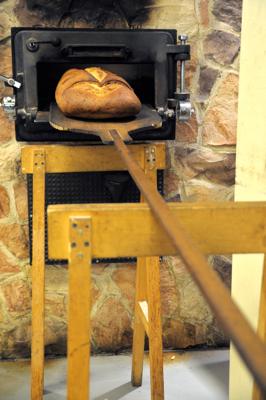
No. 128 (An Adventure to Visit 200 in Tokyo) Eataly, the largest Italian food retailer in Japan. Inside the 23 wards, it’s rare to find a brick bread-baking wood-fired oven in the store. Just like an electric oven, it’s not that the oven’s temperature automatically rises to the preset level just because you press a button. You feed the firewood, keep an eye on the oven constantly, and use your instincts to bring the bread to the desired finish. Chef Takeda says, “The thermometer is—”

Discuss this article ↗

Factory (Ichigaya)

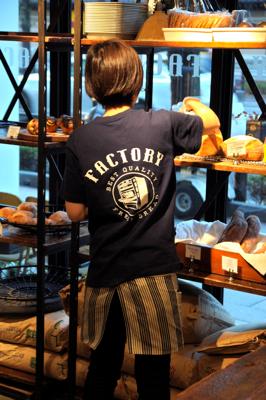
No. 126 (An Adventure to Visit 200 in Tokyo) The Factory is a bread factory. It’s where bread is baked for sale in the shop, for use at the Miuramachi Cafe (the parent café), and for bread supplied to hotels and restaurants. Originally, Chef Takahiro Miura, who baked sandwiches and eating breads served at the Miuramachi Cafe, became independent as the bread division, and opened a separate store called the Factory—this is how it came about. In the café’s kitchen—

Discuss this article ↗

Bread Workshop Kazamidori (Higashiurawa)

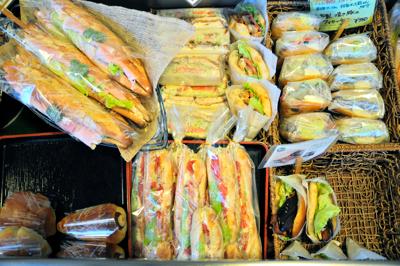
No. 125 (An Adventure to Visit 200 in Tokyo) The first thing you notice when you walk into the shop is this. Light pouring down from a high ceiling illuminates the many sandwiches lined up in the refrigerated display case in a riot of colors. The breads in this shop are giving off light. When you go to Kazamidori, you have to go hungry—or you’ll regret it. There are too many breads I want to buy. Not a single one is ordinary bread—

Discuss this article ↗

Steamed Bread

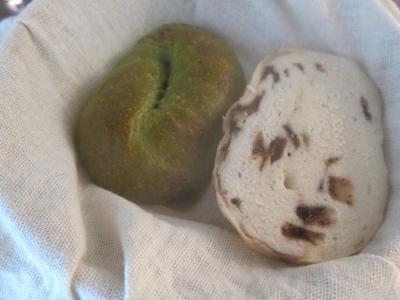
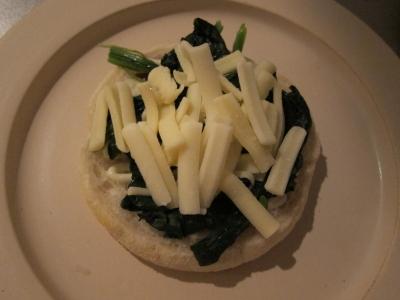
I heard somewhere that when you steam it in a seiro, it comes out fluffy and delicious. There happened to be some bagels in my freezer, so I tried it at last. I’m satisfied just buying them and I don’t use them often, but if I steam the bread a few times a week, it should also be good for the seiro. Chocolate chips and spinach & cheese. Is this what freshly made bagels are like? (I don’t know) That “just born” feeling!!

Discuss this article ↗

Mitsui Seipan Shop (Ochanomizu)

No. 124 (An Adventure to Visit 200 in Tokyo) Just a little down a side street from Akihabara’s electric-town district, there’s a slice of this kind of hometown atmosphere left. Not a business district, not a commercial area, and not a residential neighborhood either. You find private homes, long-established dining places like Japanese tea houses, and craftsmen’s workshops mixed together. It feels like you can sense that all of people’s daily workings—sleeping, eating, working, being glad, and being sad—are quietly carried out in the town’s back area. Right in the—

Discuss this article ↗

Imitating Bread.

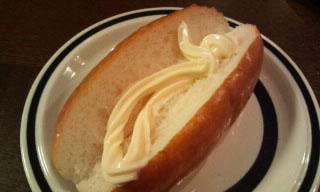
In the thread “Picking Up Bread” that Kashiwade posted yesterday, I immediately tried the hand-rolled bread filled with chirimen jaco, mayonnaise, and shiso that Juichi Itami had eaten. Since I couldn’t get sandwich bread, I spread Ajinomoto mayonnaise on a roll bun made by “Choujin” (Super Soft?). It might be a bit too much, but visually, maybe more is better. Itami Juzo also spread it generously. I put the shiso on top, and—

Discuss this article ↗

La Saison de Pan (Musashi-Kosugi)

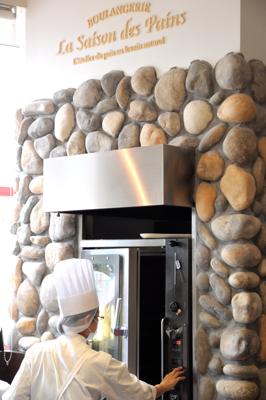
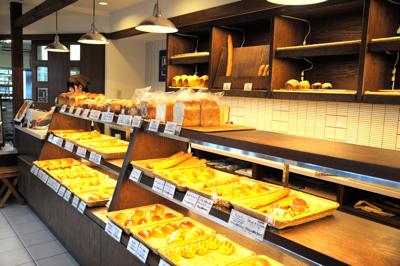
What is the 123rd shop (an adventure巡る 200 shops in Tokyo) about a baguette? All French-bread craftsmen keep pursuing the answer with their own hands and their own tongues. And with the answer they’ve finally found, they bake a baguette that is only theirs. One of the people who managed to lead to the most convincing answer among all those craftsmen is Éric Kayser. His baguette captivates the people of Paris, and in Japan, too…

Discuss this article ↗

2011 / 10

Kunkun-do (Tatesukabe)

Shop number 122 (an adventure巡る 200 shops in Tokyo) The manager is his wife; the chef is her husband. This shop has two centers. Two craftsmen, each doing everything themselves, arrange the breads they made—either each on their own or together—in one shop. 1+1 becomes 2 through the synergy of the two people, then becomes 3, and 4. Since the “taps” for deliciousness aren’t just one, you get dazzled. I eat, and I eat, and I eat…

Discuss this article ↗

LDK (Hiyoshi)

Shop number 120 (an adventure巡る 200 shops in Tokyo) Small bakeries are often run by a husband and wife. The husband quietly makes the bread, and the wife greets customers in a bright way. This LDK is definitely a husband-and-wife bakery too, but the roles are swapped. The husband handles customer service; the wife makes the bread. The owner, Yuotsune Makita, welcomes customers with a really good smile. “Both of us are… a bakery…,”

Discuss this article ↗

Otto pan (Ebihara-cho)

Shop number 119 (an adventure巡る 200 shops in Tokyo) On October 8, it moved from Yutenji on the Tokyu Toyoko Line to Nagahara on the Tokyu Ikegami Line, and reopened after renovations. “In front of the park, close to the station too. For a small shop, a place like this is the best.” That was Chef Toshihiro Kouchi. There’s a reason for a small shop. “It’s just me who makes it, and during busy hours I also sell it. From the beginning to the end, I keep my eyes on it,”

Discuss this article ↗

Bread & Confection Contest for People with Disabilities “Challenge Cup”

The Challenge Cup is a bread and confection contest in which people with disabilities and their supporters participate. There are thousands of facilities nationwide where people with disabilities work on making bread. In order to support those people, NPO corporation NGBC is the organizer—together with volunteer bakeries led by Kusizawa Electric, which manufactures bread-baking kilns—and this year marks the 5th time. The second round of screening…

Discuss this article ↗

Yamakaku (Kikuna)

No. 116 (An Adventure Touring 200 Shops in Tokyo) My trip to Yamakaku felt like an adventure. After passing through the cluttered area in front of the station, the road quickly turns into a slope and goes up toward the hills. At the top of the hill was a residential area where patches of trees remained. The blue sky felt close, and you could look down over the town. Before I knew it, the road bent and took away my sense of direction, and there wasn’t even a single shop that could serve as a landmark. Eventually, I reached a valley by going down a road named Ashigara-zaka…

Discuss this article ↗

A Day of the Prologue

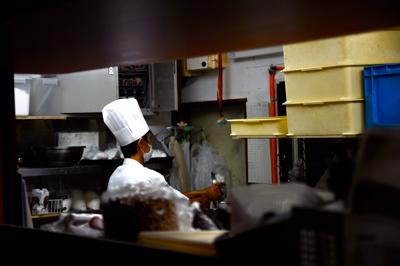
At the Bread Stage, they bake 250 types of bread in one day. The shop opens at 6:00 a.m., and the number of customers exceeds 2,000 per day. They close at 8:00 p.m. at night, and for a brief moment while the shop quiets down, at 2:00 a.m. preparation begins. Eighteen hours—from 2:00 to 20:00. I followed the beautiful 모습 of the craftsmen who kept working earnestly. AM 2:00 The first craftsman in the midnight kitchen, Saito…

Discuss this article ↗

Spica Wheat Ear (Hatanodai)

No. 113 (An Adventure Touring 200 Shops in Tokyo) Even things that are commonplace everywhere now—there would be none of them if pioneers hadn’t repeated effort and trial and error. The same is true for homemade yeast bread. Nearly 30 years ago, when Yasuji Noriya decided to make homemade yeast bread with domestic wheat, it was something that wasn’t something he could tell whether it was from the sea or from the mountains. “The charm of… a 吉祥”

Discuss this article ↗

Muur à la Muur (Isehara)

No. 111 (An Adventure Visiting 200 Shops in Tokyo) Muur à la Muur took over Benoîton from the late Chef Yukio Takahashi, who made a name for himself with home-milled flour, and it’s run in the same location (current Shonan Wheat Project). “The base is Benoîton, but I thought up everything myself, except for some parts of the formulation.” It’s not just a shop that runs a bakery—it’s the passion for wheat

Discuss this article ↗

2011 / 09

Nemo Bakery & Cafe (Musashi-Koyama)

No. 109 (An Adventure Visiting 200 Shops in Tokyo) With an interior based on black, indirect lighting sparkles. Still, for some reason, the display of breads lined up near the entrance doesn’t make you feel like you can’t easily go in. At this shop’s counter, you could sit alone and drink a beer—without hesitation. “I imagine a shop like one in a little French village. In France and in Italy, there are also bars,

Discuss this article ↗

パンラボ · 朝日新聞「このパンがすごい!」