Blog

Wheat & farming · 578 articles / Newest firstClear filters

2011 / 07

think

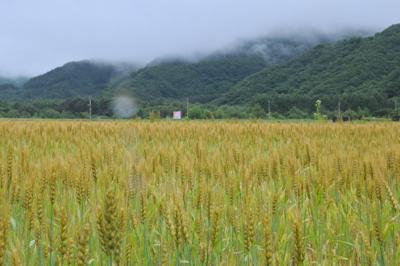
“Baku-shū” refers to the period from early summer to summer. Autumn is the season when crops ripen, but for wheat, “autumn” is summer. In other words—right now. Even in this summer, the wheat fields are producing lots of heads, and at this very moment, maybe somewhere they’re already harvesting. The wheat had been growing. Standing straight with blue-green stalks, and slowly swaying the golden heads in the wind. I was struck. An endless expanse of fields stretching as far as the eye can see, countless—

Discuss this article ↗

Grim House (亀戸)

No. 79 (An adventure visiting 200 shops in Tokyo) There’s a preconceived notion that bread is West high East low. Admittedly, the famous boulangeries covered in the media are concentrated mostly on the western side of Tokyo. But does that hold true for shokupan (Japanese sandwich bread)? Perhaps not. Like Perikan, and like Kimuraya. As for traditional Japanese breads like anpan and shokupan—tracing traditions carried over from before the war…

Discuss this article ↗

Pui Sunce (藤が丘)

No. 77 (An adventure visiting 200 shops in Tokyo) A well-known shop for French pastries—why would it end up appearing in an adventure that’s supposed to be about visiting bread shops? Among the breads lined up by the window, I spotted “Pain au Levain” (1/2, 600 yen). Even though it’s heavy, hard, and not really easy to eat, this bread is baked by a bakery where—even though it’s not the majority—even there too—there are people who take it seriously. Not as a side job…

Discuss this article ↗

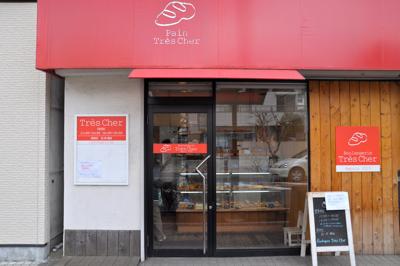
Pan Trè Shell (国領)

No. 75 There is bread that reaches a certain purity. For example, when you see the color red. Even among reds, there’s a beautiful red that seeps into your eyes, feels strangely compelling, and makes it so you can’t look away—one that’s burned into your mind even afterward. I don’t know what separates that kind of red from all the various other reds. To meet such pure colors, we go to museums. That’s why we go to bakeries, too—

Discuss this article ↗

2011 / 06

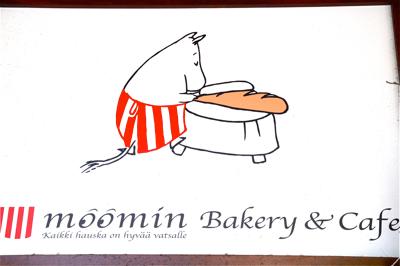
Moomin Bakery & Cafe (Korakuen)

No. 73 (An Adventure Around 200 Bakeries in Tokyo) A valuable shop that teaches you the little-known Finnish bread culture. If you look at it with the preconceived idea that characters come first, you might misjudge its true value. The person in charge of the bakery production is none other than Yuji Ikeda, who did great work at that place—Au Bacchanales. He visits regularly from Fukuoka, and his taste checks are never neglected. When it comes to the characteristics of Finnish bread, Ikeda-san says this:

Discuss this article ↗

Milk roll (Shin-Nakano)

No. 72 (An Adventure Around 200 Bakeries in Tokyo) People say the direction for bakeries has already been exhausted. We have VIRON, we have Bäckerei Brot Heim, and the bread cultures of countries other than France—already, too, are being baked by excellent craftsmen. Even so, we are waiting for a new bakery. That’s why we go around bakeries. Sometimes, after the bakery has been open for 15 years…

Discuss this article ↗

Bakery Kuma (Aobadai)

That was the 66th shop (the adventure of visiting 200 places in Tokyo). There was a rustic bread with walnuts (150 yen)—so moving it felt like I couldn’t bear to finish eating it. It’s like I’ve been staring continuously at the traces, two flavor trajectories—walnut and wheat—drawing such beautiful lines. Those two flavors are in perfect balance, creating a marriage that’s faint and delicate, but because of that you can’t take your eyes off it. With big-grained…

Discuss this article ↗

SORA (Komazawa University)

That was the 64th shop (the adventure of visiting 200 places in Tokyo). SORA is said to mean a blue sky with not a single cloud that you see in a quiet countryside in France. “It’s completely different from the color of Japan’s sky—an intense blue. That color has left a vivid impression even behind my eyelids.” The vivid blue of the French sky. The experience of French eating life centered on wine and bread is the backbone behind SOR…

Discuss this article ↗

2011 / 05

Tournage (Sasazuka)

That was the 63rd shop (the adventure of visiting 200 places in Tokyo). When I went to Tournage’s Jingumae branch in the past, the products were already sold out, and I couldn’t really see much bread inside the shop, but I did catch glimpses of women gathered around the worktables, working with a feverish energy. At the center was the owner-chef, Riko Koyama. In this shop, they run a class teaching bread made with natural yeast. Why are the breads created from Ms. Koyama’s hands…

Discuss this article ↗

Lu-Van (Yoyogi-Hachimang? Yoyogi-Hachiman)

No. 53 Previously, when I visited the Lu-Van Shinshu Ueda shop for an interview. When I asked owner Mikio Kada, “What are the characteristics of the bread?” he answered, “The bread at the origin.” With just that one sentence, the interview was over. “Origin” isn’t a field/area; it means there’s only one of it, so I thought there was no need to ask anything else. It seemed Koda-san also didn’t plan to say anything else, and then he disappeared somewhere. K

Discuss this article ↗

A lifetime of 1 gram

Being able to squeeze桜のはちみつ (cherry blossom honey) is only for a single day out of the year. The honeybees, waiting for spring, fly around between full-bloom cherry trees in Koganei Park and gather nectar. Before other flowers start to bloom and mix in that nectar, they squeeze only pure cherry blossom honey—just one day, out of the whole year. When you go to report on it, you finally fulfill the four-year promise you made with beekeeper Kint? (田頭謹吾さん, Taniguchi Kingo) on April 27 of this year.

Discuss this article ↗

2011 / 04

Wheat and Yeast: Hamaya (三軒茶屋/Sangenjaya)

Number 42. It’s been 10 years since Hamaya opened. During that time, many new bakeries have opened, and even the bakeries that were thought to be top class 10 years ago aren’t such rare existences anymore. I want to keep going to Hamaya again and again. I don’t think it has lost the freshness it had 10 years ago, and I think it has become even more precious. Back 10 years ago,

Discuss this article ↗

2011 / 03

AOSAN (Sengawa)

No. 35. At 2:30 p.m. On that day, AOSAN was packed with people waiting for the second batch of kaku-shokupan (square-shaped sandwich bread) to finish baking. About the secrets behind the method of making kaku-shoku that are fully booked up to about two months ahead. “Using good ingredients, fermenting carefully and slowly—” That’s what Oku da-san, the owner’s wife, says. Kaku-shokupan (250 yen). The impression is that it’s…

Discuss this article ↗

Stay Free (Kamikitazawa)

No. 33. When you get off Kamikitazawa Station, a new sourdough bakery has already opened. A sourdough bakery has an image of being for enthusiasts, but it was located in the busy, lively area in front of the station—somewhere like where there are chain bakeries—so I felt like I wanted to support it. A town where everyone eats sourdough bread. If, together with the nearby kepo bagels, Kamikitazawa became a place like that, that would be great.

Discuss this article ↗

La Vie Exquise (経堂)

No. 28. There was a shop with a dizzying sense of style. It’s worth walking the more-than-1-kilometer distance from Kyōdō Station. You’re stunned by the shape of the bread, the way it stands there, how it’s displayed, and the interior that uses wood in a modern way. You can also see that a young chef is baking all by himself from the sales area. After looking at each loaf that comes out of the oven, you get stunned by some breads, and you start to…

Discuss this article ↗

Artisan Terra (三軒茶屋)

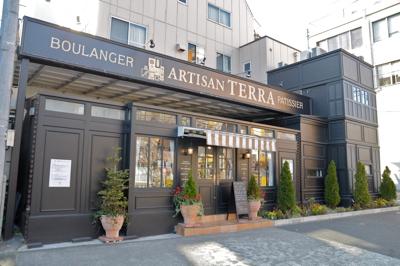
No. 27: An advanced brand of Boulangerie La Terre. The workshop has obtained organic JAS certification. The thorough commitment to ingredients—such as organic produce—and linking that to traditional French bread-making. The depth of flavor, the weight that hits your chest, and the hard-style breads that are strongly baked—these are a perfect pair. A superb differentiation has been achieved with La Terre, which is softer and lighter. Artizan…

Discuss this article ↗

Boulangerie La Terre (池尻大橋)

No. 26: When you go to a bakery, you often see labels like “Made with domestic wheat” or “Made with Haruyokoi.” So each time, I think, “It must be delicious.” But I don’t really know the truth. Is it truly “more delicious” than bread that doesn’t write anything about the brand? In addition to the taste of the flour, the flavors of the yeast, the method of production, and the sub-ingredients are multiplied together to make the bread…

Discuss this article ↗

2011 / 02

Boulangerie & Café Manmano (代々木上原)

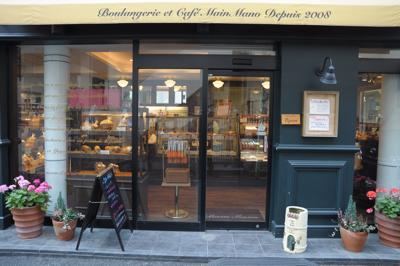
No. 24. A new shop that has been open for only two years. I have a feeling that the name “Manmano” will come to be remembered by people because of the cream puff… Chef Masato Mōri was the chef pâtissier at the Hôtel de Crillon in Paris, a place known for hosting VIPs from around the world, including His Majesty the Emperor. The cream inside the cream puffs is made of milk and eggs,

Discuss this article ↗

Signifiant Signifié (三軒茶屋)

No. 22: A tightly held air hangs in the room. It’s like a sacred space—like a church or a venerable temple. Perhaps it’s because people, the fixtures, and decorations are all devoted entirely to bread. When you eat the bread of Signifiant Signifié, you rediscover the taste of the ingredients. Even if they’re ingredients you already know well, the thin skin is peeled away from the everyday scenery, as if the haze has been removed—there’s astonishment like that. It is…

Discuss this article ↗

パンラボ · 朝日新聞「このパンがすごい!」