Blog

Taste & language · 1,370 articles / Newest firstClear filters

2015 / 09

Le L’Ensor Chef Shimizu’s View of This Year’s Dinkel

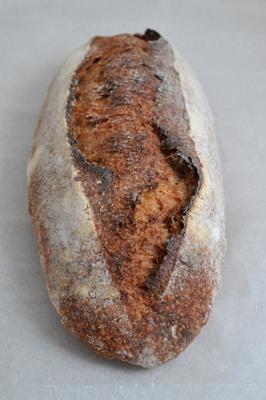
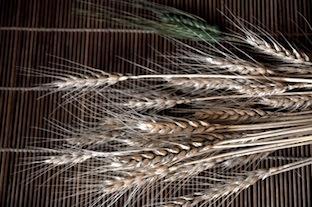
Dinkel wheat from Daichido in Shiga Prefecture. A wheat’s native species, it combines extraordinary nutty savoriness and sweetness—also reminiscent of walnuts and chestnuts. Dinkel’s new wheat has finally been delivered to bakeries, and you can now eat it even in central Tokyo. Dinkel wheat breads from Le L’Ensor—also bread à portel—are now new wheat. What’s especially impressive about this bread is that you can feel “red” in the flavor. A brown color like whole wheat flour

Discuss this article ↗

2015 / 08

Eating new wheat as quickly as possible in Tokyo

In Tokyo, there are shops where you can eat “new wheat” as early as possible. Andersen at Isetan B1. On this sales floor crowded with lots of people, breads made with Kuwana mochi wheat—harvested just this year—are lined up. There is “Kuwana Mochi Wheat Bread,” and also “Kuwana Mochi Wheat Roll (Cheese),” made by topping the same dough with cheese and baking it until crisp (available until the end of August). A surprising texture. After eating…

Discuss this article ↗

2015 / 07

Let’s taste breads made with new wheat from Kyushu.

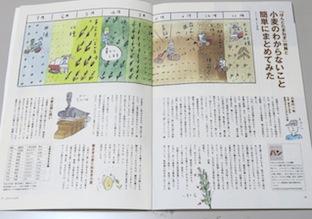
Ikeda: “This week, new wheat flour that was milled from new wheat harvested in the field of Hiroki Higash? Mr. Higash? in Kumamoto will be processed.” Special Investigation Unit: “Oh!” Ikeda: “In the bread magazine’s pages P80–81, Maimu Hayashi drew an illustration—however, that’s based on Mr. Higash’s field.” Special Investigation Unit: “Ohtto, ohtto!” Ikeda: “If you read it, you’ll probably get a little sense of how wonderful Mr. Higash’s wheat is—and the hardships until harvest…”

Discuss this article ↗

What are “otoko pan” (a men’s bread)?

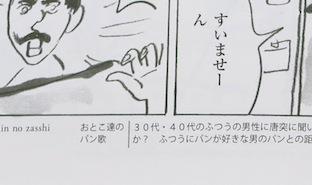
In a bread magazine that is currently in the midst of fermentation, there is a little column called “Men’s Bread Song.” In the sidebar of Horii-san’s manga, there’s a tiny thing (a manga term meaning vertical and horizontal bars at the base, i.e., the vertical caption/border and horizontal bar). (The title, of course, is also a play on “Utae (elegy) for men,” so it’s a hard-type bread.) The men in their 30s and 40s were asked, out of the blue, whether they like bread. For those who answered that they do, write down their favorite breads, breads from their memories, and so on.

Discuss this article ↗

2015 / 06

Taste the bread Chef Wari-chef made in “The Magazine of Bread” in real life!

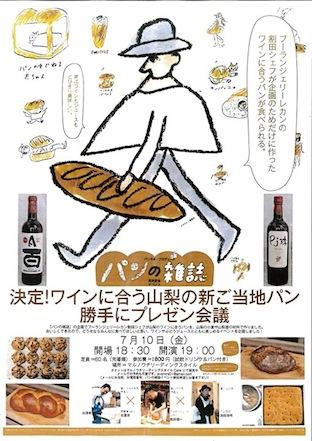
On Friday, July 10, “Decided! A ‘Please Present It Yourself’ Meeting for Yamanashi’s New Local Breads That Go with Wine” will be held in Marunouchi Reading Style (inside KITTE in front of Tokyo Station). It’s a rare opportunity to actually taste special breads made by Boulangerie Lecan Chef Kenichi Wari ta, featured in “The Magazine of Bread.” Terroir = the taste of the land. Breads made with ingredients unique to that region, and... and wine...

Discuss this article ↗

Starting today at 22:00, the Bread Meeting.

When I was listening to J-WAVE, Harry Sugiyama-san said, “Hello WORLD for today is the Bread Meeting~! We’ll eat Danish with Hiroaki Ikeda-san from Bread Lab, the kind of person you just can’t stop talking when you start discussing bread!” Apparently it’s Danish. Whenever I listen to the Bread Meeting, I end up wanting to eat whatever bread is brought up as a topic, so I rushed... (and something about a) Ceb...

Discuss this article ↗

Decided! A “Please Present It Yourself” Meeting for Yamanashi’s New Local Breads That Go with Wine

Bread Lab-produced “The Magazine of Bread” Release Commemorative Event Decided! A “Please Present It Yourself” Meeting for Yamanashi’s New Local Breads That Go with Wine For the planning of “The Magazine of Bread,” Chef Kenichi Wari ta of Boulangerie Lecan made breads that go with Yamanashi wine—using Yamanashi wheat and ingredients from Yamanashi. They turned out so delicious that we thought you should all be able to eat them, so we invited everyone to enjoy them together with wine and grape juice, in a fun...

Discuss this article ↗

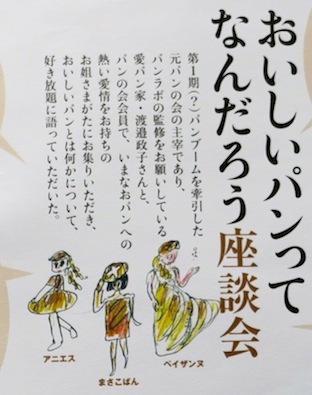
What exactly is “delicious bread”? Roundtable discussion

From “The Magazine of Bread” P48. Masako-pan, Paizan nun, Anies. “What exactly is delicious bread? Roundtable discussion,” in which three young women with more than 30 years of bread history talked as they pleased. The words from the big sisters who had eaten every kind of bread more than 10 years ago are simple—but forever. There are answers, but it’s a never-ending story. Real and fun...

Discuss this article ↗

2015 / 05

National Wheat MAP made with “Tasting Wheat”

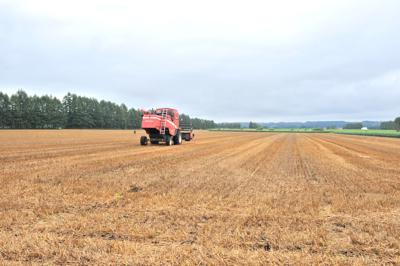
Do you know what kinds of wheat for making bread are currently being produced in Japan? In Hokkaido: Haruyutaka Haru yoi—Haru Kirari—Yumechikara—Kitanokaori—Kitahonami. In the southern Tohoku region: Koyuuki wheat—Yukichikara—Kanto Nogyo Rinshi 61—Yumeshihou—Yumekaori—Hanamannten—W8. In the Chubu/Kinki area: Tamizumi—Dinkel wheat (German). In Kyushu: Nishinokaori—Minaminokaori—Chikugo...? And so on—and...

Discuss this article ↗

“Shiga labo” Training Session Report

On May 13, at San’ei Shokuhin Kogyo in Akihabara, Chef Katsuei Shiga of Sinifian Sinifieu held a training session called “Shiga labo.” When Katsuei Shiga-san stood in the training venue, the same kind of air you feel in the kitchen of Sinifian Sinifieu filled the room. Tight and intense, yet free-spirited and broad-minded. As long as you have the desire to move forward and make delicious bread, it’s like you can do anything there...

Discuss this article ↗

Recan Wari ta-san makes Yamanashi’s local breads

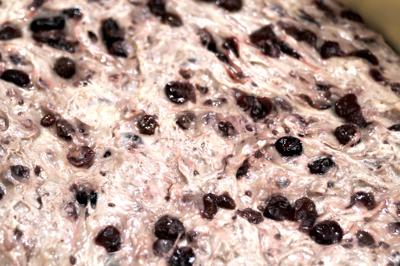
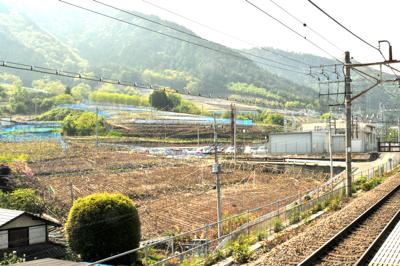
When you get off at Katsunuma Budō-gō Station, you truly find yourself surrounded by grape fields. For the project in “The Magazine of Bread,” released on May 29—Chef Lecan Wari ta, from Boulangerie Lecan, made local breads using local ingredients as part of “Please Produce It Yourself.” The first time is Yamanashi. The scenery of an alluvial fan formed by spring, peach orchards, and grape fields is so beautiful. Rails-like and eerily lifelike—raisin(s) made that go beyond semi-dried, into rare-dried... cream-like... (レアドライのレーズンを作)

Discuss this article ↗

Bread Magazine 52/29

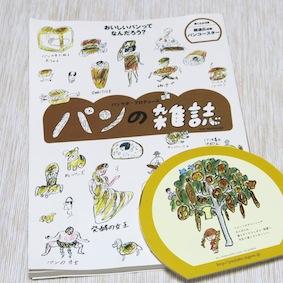
Published on 5/29. Cover. The item in the bottom-right is a bread coaster that comes attached without fail. The illustration was newly drawn by illustrator Michihiro Hori. With the cover and coaster made, it’s incredibly celebratory, so I immediately tried placing some bread on it. Mm, it looks good. If you put it on, you eat it—that’s the principle. Wow————————!!!!!!!! Bread crumbs————————!!!!!!!! But

Discuss this article ↗

2015 / 04

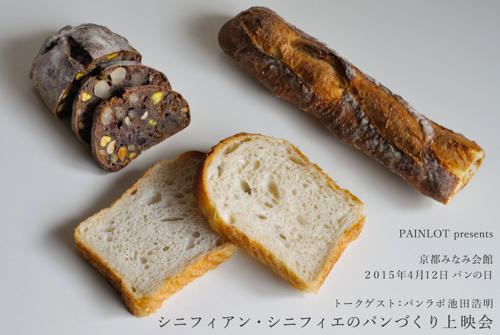
“Shinifian Shinifē’s Bread-Making” Screening—preparation

Everything exists in bread. For example, you go to a certain bakery for an interview and watch them make bread in the kitchen. After the interview, when you buy the bread and eat it, it tastes like what you saw a moment ago in the kitchen. You can smell the same kind of seeds that were put in then; because it was mixed in such a way, it becomes this flavor; because it was shaped like that over there, it ends up with this texture—like that. As for how it looks...

Discuss this article ↗

2015 / 02

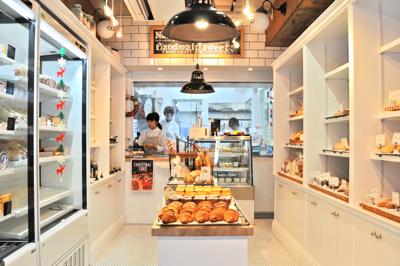
Bread & Butter Factory (Nikotamagawa) [New store #3 in 2014]

At last, the much-awaited concept. A new store has appeared in Nikotamagawa with a lineup centered on an inseparable duo: bread and butter. Just past the RISe, the stylish redeveloped office buildings neatly lined up in an orderly district. Black exterior, interior based on white. After working as a massage therapist, he began his career at La Saison des Pains in Musashi-Kosugi at 30—Noi Nagata...

Discuss this article ↗

Unbelievable—zero-gravity donuts

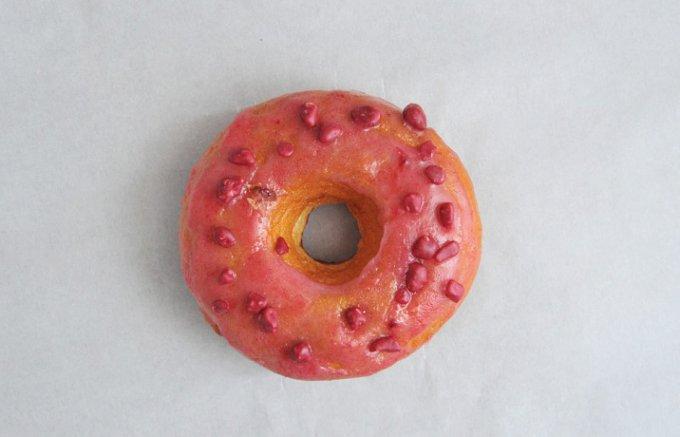
An unbelievable texture—softly sinking and then slicing cleanly with that crisp bite. You’re certain about what’s going to happen, yet it’s spectacularly betrayed. The dough sinks with a “puni-yuun” sound. It sinks endlessly, as if like a Tempur pillow—so soft and leisurely. Once it sinks, it’s your turn to expect it to spring back. That’s what you’d normally think. It doesn’t come back. It just cuts cleanly with a “kun-” and then melts away, and the dough disappears with a “churu-churu” sound.

Discuss this article ↗

2015 / 01

It was lively even on “Apple Day” in Osaka!

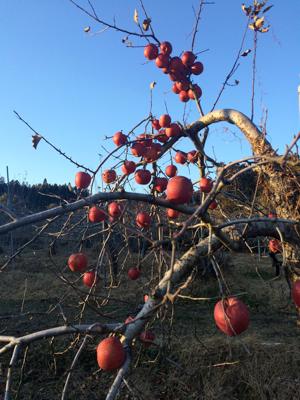
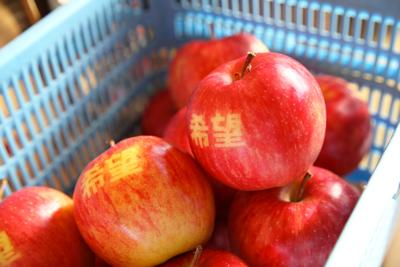
On January 17 and 18, “Apple Day” was also held in Osaka. This was an event that aimed to make use of the “Hope Apples” that had survived the tsunami in the disaster-stricken area of Rikuzentakata, and to connect it to reconstruction. It was made possible because the “Osaka Nichi-Nichi Shimbun,” which is posted to households throughout Osaka Prefecture, supported the initiative of Hope Apples, thanks to their passionate cooperation. In the paper dated January 17, a full page is

Discuss this article ↗

“Apple Day 2015” Report & Thank-You

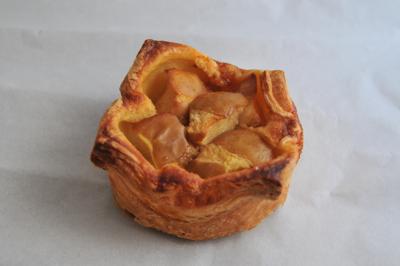
“Apple Day,” an event where you use “Hope Apples” that survived the tsunami in Rikuzentakata to make them into bread at a lineup of notable bakeries. For the third installment, from January 9, 10, and 11, it was held at each store in the Tokyo metropolitan area. How would the apples grown by Shuichi Kinno (金野秀一) of Yonemizaki-chō, Rikuzentakata City—apples grown in the same orchard—turn into bread at the hands of each chef? Every loaf is individual, and those

Discuss this article ↗

2014 / 12

Emergency Notice! “Apple Day Party in Roppongi”

On January 11, the day of Apple Day, we will hold an event where everyone gets together to taste the products of each bakery made using Hope Apples! (How “Oishii Rikuzentakata” was like, held at Réfectoire World in January this year.) The stores partnering with and sponsoring Apple Day total 14 locations, and it’s impossible for one person to visit them all. Then, if everyone collects bread and shares it among everyone, it will be delicious—and you can eat a lot

Discuss this article ↗

パンラボ · 朝日新聞「このパンがすごい!」